Monday, June 13, 2022

On Hedonic Consultation


AKA The Evolution of the Autobiographical Odor Encyclopedia 

This study copied below measures how fast we detect good smells vs bad smells (spoiler, bad smells are detected faster). 

But while reading through this, consider that bad smells can become good over a series of exposures matched with good feelings. Aged cheese, fermented cabbage, and burned cannabis are pretty well known examples of this. There's also people, who smell, each with our own odor fingerprint, although we may not realize it at times, as it might be below our limit of detection.

And then there's the reverse, where things (or people) that once smelled good, all of the sudden smell bad, such as with changes in birth control, or pregnancy, or after a viral infection like Covid (see the parosmia triggers study). In those cases, the whole olfactory system is rewritten, a kind of blank slate re-learning, where smells with strong odor components (like individually unique body odors, or coffee) are perceived as if for the first time, with the bad stuff up front. And all you can focus on is the bad, since you have to "re-learn" the smell, and how the good integrates with the bad to produce something that is neither good, nor bad, nor even identifiable by semantic description, but only by the name of the person. 

Nonetheless, there seem to be some good millisecond metrics here:

Seeing how odor is processed in the brain
Jun 2022, phys.org

  • Detection occurred before the odor was consciously perceived by the participant
  • Odor information in the brain is unrelated to perception during the early stages of being processed
  • Later, unpleasant odors were processed more quickly than pleasant odors

The participants wore an EEG cap while having smells shot at their face, and so that researchers could see when and where odors are processed in the brain.

"We were surprised that we could detect signals from presented odors from very early EEG responses, as quickly as 100 milliseconds after odor onset, suggesting that representation of odor information in the brain occurs rapidly"

Remember that the olfactory system has only a few synapse-steps, making it the most direct sensory system we have.

And then watch how they pretty much rehearse Proust's deep cookie immersion:

When unpleasant odors (such as rotten and rancid smells) were administered, participants' brains could differentiate them from neutral or pleasant odors as early as 300 milliseconds after onset. However, representation of pleasant odors (such as floral and fruity smells) in the brain didn't occur until 500 milliseconds onwards, around the same time as when the quality of the odor was also represented. From 600–850 milliseconds after odor onset, significant areas of the brain involved in emotional, semantic (language) and memory processing then became most involved.

via University of Tokyo: Mugihiko Kato et al, Spatiotemporal dynamics of odor representations in the human brain revealed by EEG decoding, Proceedings of the National Academy of Sciences (2022). DOI: 10.1073/pnas.211496611

Post Script:
Professor Robert Sapolsky Stanford Lecture - On Recognizing Relatives (with smell)

Learning to Smell: Olfactory Perception from Neurobiology to Behavior, by Donald Alan Wilson and Richard J. Stevenson, Johns Hopkins University Press (2006)

Thursday, June 9, 2022

Covid's Parosmia Uncovered


Covid has a smell. Not that you can smell sick people, although you can actually. Dogs have proven that it's possible; only that humans have never been trained, and for obvious reasons.

Instead, we mean that things "smell like Covid." That's because everyone who got pre-Omicron Covid also got hit with a neuroplastic time bomb where their olfactory neurons got attacked and then reconfigured. Half the people who got Covid, and its anosmic introduction, knew they had it, and the other half didn't. (This according to a May 2022 study, linked here, and repasted below.)

Lost of people would argue with that stat. And I would have to argue back. The absolute worst source of data for testing anosmia etc is the subjective reporting of the people themselves. We don't even know we have a sense of smell in the first place, nevermind detecting that it's been removed. There are congential anosmics (can't smell from birth) who don't realize they're anosmic until they're teenagers! How do you not realize that? Because we don't talk about smells. They're outright lingua-phobic. And so when we lose it, especially in the midst of a respiratory infection that messes with our breathing, we don't even notice. We also think it's our sense of taste, so when someone asks "have you experienced any change in your sense of smell," you say no, but I did lose my sense of taste. In that study, they used Sniffin' Sticks, so an objective measure, and so they got the 100% stat. 

Next, things "smell like Covid" because after a bout of anosmia, your olfactory system needs to reboot, retrain, pick your computer analogy, and in the process, there's some bugs in the code. Eggs smell like Covid, coffee smells like Covid. Shit? Smells like biscuits. Wait, what? Yes, the Faeces Paradox, see below, it's all been explained for us. Thanks, Flavor Center at University of Reading:

Researchers find cause of disordered smell
May 2022, phys.org

Among the 29 volunteers with post-viral parosmia, scientists found 15 commonly identified compounds that triggered parosmia. They also found reduced sensitivity in some people, via lower TDI scores from Sniffin’ Sticks, although some who were considered functionally anosmic could still detect some of the trigger smells...

Some of the most cited food and drinks that set off parosmia in sufferers include:
  • Coffee
  • Onions
  • Garlic
  • Chicken
  • Green peppers

The most common trigger molecules are grouped into four distinct categories based on structure: 
  • thiols
  • trisubstituted pyrazines
  • methoxypyrazines
  • disulfides
  • (and as always with smell-things: some less common triggers did not fall into any one of these categories)
  • (these molecules tend to be potent, have very low olfactory detection thresholds and, in isolation, are neither distorted nor unpleasant for nonparosmics)

Trigger Molecules and their Parosmic Descriptions:
  • 2-furanmethanethiol ("coffee") is the most frequently reported trigger. Whereas NONPAR (non-parasmics) used a range of food-related terms to describe it (coffee, roasty, popcorn, smoky), PAR (parosmics) often struggled to find suitable descriptors, as they were unable to relate it to anything they had smelled before. PAR typically used words describing its hedonic quality (disgusting, repulsive, and dirty) or new coffee (relating to the altered smell of coffee since onset of parosmia) as described previously. Four PAR described it in the same way as NONPAR (biscuit, toasty or roasty) indicating that it is not universally parosmic, but certainly an important and frequent molecular trigger of parosmia.
  • 2-methyl-3-furanthiol and its corresponding methyl disulfide  ("meaty") were detected but reported less frequently as distorted. 
  • 2-Ethyl-3,6-dimethylpyrazine (also "coffee") was the second most frequent trigger in coffee; described with a variety of food terms by NONPAR, but by “new coffee”, “unpleasant” and “distorted” by PAR.
  • 2,3-diethyl-5-methylpyrazine, 2-ethyl-3,5-dimethylpyrazine and trimethylpyrazine (found in roasted, fried and baked goods) were common triggers. These compounds also triggered a parosmic response to cocoa, grilled chicken, and peanut butter
  • 2-Ethyl-3-methoxypyrazine, 2-isobutyl-3-methoxypyrazine and 2-isopropyl-3-methoxyprazine (green peppers) were common triggers in coffee.
  • 3-methyl-2-butene-1-thiol (pungent and weedy) was reported as a trigger 9/29 times.
  • 3-mercapto-3-methylbutanol and its formyl ester are potent aroma compounds in coffee, and were detected in half the cases, but only reported as distorted 5 or 6 times.

Exceptions:
  • The unknown compound has been tentatively identified as 4-methylthio-4-methyl-pentan-2-one, but this is yet unconfirmed. (What the heck is "the unknown compound?)
  • Although thiols and disulfides seem to effectively trigger a parosmic response, there are two notable exceptions.
  • Methanethiol, detected by some NONPAR, was not detected by any PAR. Likewise, dimethyl trisulfide is detected by 12/15 NONPAR but only by 4 PAR, and only reported once as a trigger.
  • A few compounds were detected but never reported as triggers.
  • 4-Ethylguaiacol was detected by 7 PAR and always described as spicy, sweet and smoky, but never parosmic.
  • Similarly, (E)-β-Damascenone, a key odour-active compounds in coffee, was detected by 6 PAR and always described as jammy and fruity.

The Faeces Paradox
  • Foods smell of faeces yet faeces smell of food (biscuity or pleasant)
  • Two parosmic researchers did not detect these compounds in a faecal slurry and were unaware of any foul smells.
  • However, they detected several other compounds, many of which they had also detected in coffee, and only some of which triggered parosmia.
  • In comparison, a normosmic scored the intensity of indole and skatole as close to the strongest imaginable. 
  • This provides a neat explanation as to why the changes in valence for faecal samples is reversed. 

How did they do it?
They GCMSd different sources, like coffee or onions, so that the individual molecules could be separated and presented one-at-a-time to the volunteers, so they could detect the specific molecules in the source that repulses them.

Why did they do it?
Prior to the global pandemic caused by COVID-19, parosmia was a rare condition known to occur after infections such as cold, flu or sinus infections, with very little awareness about the causes and treatments for the disease.

During the pandemic COVID-19 symptoms included loss of smell and taste in 50–60% of cases, of which about 10% developed parosmia. Since the omicron variant, loss of smell and taste has become a less common symptom (estimated to occur in about 10–20% of cases) and parosmia cases are likely to be fewer in number, parosmia is still estimated to affect 2 million people in Europe.
Not exactly. See below.

via the Flavor Center at University of Reading: Jane K. Parker et al, Insights into the molecular triggers of parosmia based on gas chromatography olfactometry, Communications Medicine (2022). DOI: 10.1038/s43856-022-00112-9


Study finds sensory loss in ~100% of active COVID infections, which is twice as high as self-reports
May 2022, phys.org

In participants with active infections during the delta surge, a majority (22 of 25) had been vaccinated. Objective screenings found that 100% were experiencing a diminished or lost sense of smell—but only 54.5% self-reported any problem with odor detection.

via Ohio State University: Kym Man et al, Chemosensory losses in past and active likely Delta variant break-through COVID-19 cases, Med (2022). DOI: 10.1016/j.medj.2022.05.004

Image credit: Free Photos at img freepic dot com [link]

Post Script:
Can 'smell' trigger tumors?
May 2022, phys.org
 
"Now that glioma preferentially emerges in the OB, will neuronal activity in the olfactory circuit affect the emergence of glioma?" the researchers wondered. This "mind-blowing" flash of inspiration became a turning point in this study. The research team attested to this hypothesis through a series of experiments.

In this study, they employed a cutting-edge chemogenetic technology to specifically manipulate the neuronal excitability of ORNs. They found that inhibiting the activity of ORNs reduced the size of the tumor significantly, whereas activating their activity increased the size of the tumor. It was therefore concluded that the neuronal excitability of ORNs was the root of gliomagenesis.

To further verify this conclusion, the researchers suppressed olfactory inputs through naris occlusion by using small plugs. They found that with naris occlusion, tumors were significantly hindered in the olfactory bulb, indicating that olfactory stimuli could regulate gliomagenesis.

via Zhejiang University: Pengxiang Chen et al, Olfactory sensory experience regulates gliomagenesis via neuronal IGF1, Nature (2022). DOI: 10.1038/s41586-022-04719-9

Post Post Script:
Clinical trial led by Thomas Jefferson University Hospital paves the way for innovative topical treatment
Mar 2022, Jefferson Hospital

Platelet-rich plasma (PRP) is a common restorative therapy used to regenerate cells, heal tissue, and address an array of medical conditions from healing injured muscles and tendons to increasing hair growth and reducing the appearance of scars. Animal studies have shown that PRP helps regenerate the olfactory epithelium, which may be the site affected in COVID-19 induced olfactory dysfunction (OD). As smell and taste are closely interrelated, improved sense of smell can help with sense of taste as well. Until now, PRP has been used as a nasal injectable in several small clinical trials for smell loss. Although the results were promising, nasal injections can be uncomfortable and invasive for patients.

A recent phase I clinical trial of eight patients who had at least six months of olfactory disturbance has shown preliminary success with 50 percent of participants (4 people) experiencing clinically significant improvements in smell and taste.

Also:
Autopsies suggest COVID’s smell loss is caused by inflammation, not virus
Apr 2022, Ars Technica

via Johns Hopkins: Ho C, Salimian M, Hegert J, et al. Postmortem Assessment of Olfactory Tissue Degeneration and Microvasculopathy in Patients With COVID-19. JAMA Neurol. Published online April 11, 2022. doi:10.1001/jamaneurol.2022.0154

Monday, June 6, 2022

Consistently Inconsistent


What's in your weed? You might be surprised
May 2022, phys.org

  • 90,000 samples across six states
  • Leafly database of chemical analyses compiled from cannabis testing centers
  • Largest analysis to date of the chemical composition of marijuana products
  • Commercial labels "do not consistently align with the observed chemical diversity"

"Our findings suggest that the prevailing labeling system is not an effective or safe way to provide information about these products," said co-author Brian Keegan, an assistant professor of Information Science at CU Boulder. "This is a real challenge for an industry that is trying to professionalize itself."

"A farmer can't just pick up an apple and decide to call it a Red Delicious. A beer manufacturer can't just arbitrarily label their product a Double IPA. There are standards. But that is not the case for the cannabis industry," said co-author Nick Jikomes, director of science and innovation for the e-commerce cannabis marketplace Leafly.com.

Products do tend to fall into three distinct categories:
  • high in the terpenes caryophyllene and limonene
  • high in myrcene and pinene
  • high in terpinolene and myrcene
  • (similar to Avery Gilbert's study; Citrus vs Earthy)
  • (but those categories do not neatly correspond to the indica, sativa and hybrid labeling scheme)

Some strains, such as one called White Tahoe Cookies, were surprisingly consistent from product to product, while others, such as one called Durbin Poison, were "consistently inconsistent," said Jikomes.

"There was actually more consistency among strains than I had expected," he said. "That tells me that the cultivators, at least in some cases, may not be getting enough credit."

via University of Colorado at Boulder: Christiana J. Smith et al, The phytochemical diversity of commercial Cannabis in the United States, PLOS ONE (2022). DOI: 10.1371/journal.pone.0267498
 

Thursday, June 2, 2022

Scientists Make Discovery


Olfactory neurons adapt to the surrounding environment
May 2022, phys.org

This title could have had way more clickbait. The news is that we have no idea what's going on with olfactory neurons. 

Not like it's ever been claimed; they just never seem to obey any sensical laws, and they're always doing things we can't understand, but now it seems that even basic assumptions about how they work are way off.

The scientists discovered an unsuspected variability in gene expression profiles depending on the expressed olfactory receptor and previous exposure to odors. 

And in a previous study, these scientists found that after stimulation of a receptor by an odorant molecule for less than an hour, the expression of the gene coding for this receptor decreased in the neuron, indicating a very rapid adaptation mechanism.

"While it was thought that the binding of an odorant molecule would only lead to the activation of the corresponding receptor, we discover that olfactory neurons drastically change their identity by modulating the expression of hundreds of genes after activation. And this new identity is again dependent on the expressed receptor. We are facing an unexpected, massive, rapid and reversible adaptation mechanism," explains Ivan Rodriguez, co-corresponding author of the study.

This work reveals that olfactory neurons are not to be considered as sensors simply passing from a resting state to a stimulated state, but that their identity is in permanent evolution, not only according to the expressed receptor but also according to past experiences. This discovery adds another level to the complexity and flexibility of the olfactory system. 

via Faculty of Science and the Faculty of Medicine of the University of Geneva: Luis Flores Horgue et al, Transcriptional adaptation of olfactory sensory neurons to GPCR identity and activity, Nature Communications (2022). DOI: 10.1038/s41467-022-30511-4

Image credit: Unexpected Outcome, by shironosov and Getty, 2022 - Three shocked scientists looking at the obtained substance expressing intense emotions [link]

Post Script:
Consider that the olfactory family of genes is evolving within us in real time. It's a huge group of genes, being the largest family there is, at 2% of the genome, and it's highly variable in the population, with a 30% variation from person to person. 

Do you remember that item we learned back when the Human Genome project came out, that we share over 90% of our genome with monkeys, and almost as much with bananas? Now consider that our individual olfactory apparatus is 30% different from that of other humans. There's a lot of action here in the olfactory system.

Just wait until we figure out that it's running our immune system, because that's when things will get really crazy. 

Friday, May 13, 2022

Smellosophy


The world of smell goes unnoticed to most of us. There are more books in the Library of Congress on perfume bottles than there are about smell itself. The year 2020 will mean lots of things to lots of people, but most of us will not remember it as the year that changed the literary world of smell forever.  

Image credit: Camillo Golgi's image of a dog’s olfactory bulb from his Sulla fina anatomia degli organi centrali del sistema nervoso, 1885. [link]

Together, Smellosophy by Ann Sophie Barwich and Nose Dive by Harold McGee have advanced the written record of our sense of smell by 40 years. Trygg Engen wrote The Perception of Odors in 1982, and we haven't seen a real update since. Obviously there have been scores of researchers writing journal articles since then, but an article is not a book. Also, there have been books written about smell, by well-regarded scientists and writers like Avery Gilbert, Rachel Herz, Synnott, Classen and Howes, Wilson and Stevenson, Alain Corbin, to name a few that come to mind.

But these books, both of them, are something else. They are dense, they are exhaustive, and they offer the most detailed explanation of how your sense of smell works, and what things smell like, than any other book you could read about the topic. 

*For third place in the most important smell-books of the past 40 years, maybe we should add The Essence: Discovering the World of Scent, Perfume and Fragrance by artbook publisher Gestalten, also in the year 2020/2021, and runner-up to Nose-Dive for The Perfumed Plume's best fragrance book of 2021

I'll save Harold McGee for another day, since I'm still parsing his almost 700 page codex. I thought it more important to finish Barwich's book first; it's the more scientifically hardcore of the two, and I was afraid my attention might wane the other way around. And this is not a book you want to breeze through. Again, it's probably the most comprehensive book on smell ever written. I took notes, some of which I'll paste here:

Notes on the author: Sophie Ann Barwich is a a cognitive scientist and empirical philosopher with a doctorate in odor classification and a background in philosophy and history, and spent time in Stuart Firestein's Columbia lab, and also interviewed a ton of perfumers, fragrance industry professionals, and just about anyone else who's important in the olfactory world that's still alive (except Asifa Majid, although she is cited in the book). She's an Assistant Professor at Indiana University Bloomington, between the Department of History & Philosophy of Science and the Cognitive Science Program.

Your nose is tailored to measure the world as calibrated by your mental life and physiological conditions. (p12)

Important terms for the olfactory enthusiast: Combinatorial and combinatorics refers to the combination of massive datapoints into a single datapoint, like how the olfactory bulb takes thousands of chemicals and pulses out a single signal in response; Foregrounding like from this sentence, "Smell is frequently embedded in the conscious experience of the world without being foregrounded as an olfactory experience" (p91); juxtaglomerular cells means next-to-glomerulus cells, juxta-anything sounds interesting, so...

Referencing Asifa Majid: Odor language is strongly contingent upon the rules of conventionalization (p102)

  • The Lingua Anosmia is Perishable: Leslie Vosshall - One central problem with these new computational studies were the data; "Most of the theoretical work has been based on a single 30 yr old dataset. Why has no one done an update?" (p173)
  • Andrew Dravnieks Atlas of Odor Character Profiles: "a great list in the early 80's, for use in the Northeast of the United States, for people who are baby boomers." (p173)
  • But so many of the words on that list have no frame of reference for the people who come to our studies. Any of these lists...they are perishable, highly culturally biased lists, that will work for some specific period in history, for a specific target audience. (p173)
  • The Odor Atlas didn't map odor quality space, "they mapped the odor quality space of Dravnieks." (p173)
  • The DREAM Project did provide a strong case for data mining, but only had a 0.3 correlation. (p175)

Polar surface area is a key metric for olfactory receptors (p185) -Poivet et al. "Functional Odor Classification through a Medical Chemistry Approach", Science Advances 4 n2 (2018)

Terry Acree's potato chips, only 3 odorants do the trick: methanethiol (rotten cabbage), methionol (potato), 2-ethyl-3,5-dimethylpyrazine (toast) -Computing Odor Images. Rochelle MM, Prévost GJ, Acree TE. J Agric Food Chem. 2018 Mar 14;66(10):2219-2225. doi: 10.1021/acs.jafc.6b05573. https://pubmed.ncbi.nlm.nih.gov/28285523/

Stimulus Representation Beyond the Map: Gordon Shephard and Thomas Cleland: Olfactory perception is more like the feature coding of face recognition in the visual system. The olfactory bulb does not represent chemical classes but the chemical environment; it tracks the statistics of a changing odor environment (Shephard and Cleland, p233) [And I would say that society and culture are part of that environment, and that given enough data, the language of smell can be a map of our changing social environment.]

"The brain evolved from the body and not the other way around" -Terry Acree (p237)

Predictive powers of the nose, Walter Freeman studying neural networks at Berkeley in the 1980's:
How brains make chaos in order to make sense of the world. Skarda, C. A., & Freeman, W. J. (1987).  Behavioral and Brain Sciences, 10(2), 161–195. https://doi.org/10.1017/S0140525X00047336. https://psycnet.apa.org/doi/10.1017/S0140525X00047336
Simulation of chaotic EEG patterns with a dynamic model of the olfactory system, Walter J. Freeman, Biological Cybernetics (2004) v56 p139-150. https://link.springer.com/article/10.1007/BF00317988
Model of biological pattern recognition with spatially chaotic dynamics, Yong Yao and Walter J. Freeman, Neural Networks (1990), v3 p153-170. https://www.sciencedirect.com/science/article/abs/pii/089360809090086Z
Neural networks and chaos. Freeman WJ, J Theor Biol. 1994 Nov 7;171(1):13-8. doi: 10.1006/jtbi.1994.1207. https://pubmed.ncbi.nlm.nih.gov/7844992/
Characterization of state transitions in spatially distributed, chaotic, nonlinear, dynamical systems in cerebral cortex. Freeman, W.J. Integrative Physiological and Behavioral Science 29, 294–306 (1994). https://doi.org/10.1007/BF02691333. https://link.springer.com/article/10.1007/BF02691333

Unknown Odors (Covid) - based on Walter Freeman's work: "known odors elicit an established spatiotemporal signature of activity. Unknown odors first evoke chaotic activity before acquiring their own spatiotemporal signature for future recall. Chaos here was a condition for learners so that the brain would not confuse a novel odor with the signature of an already known one." (p238-239)

"The spatiotemporal activity in the bulb should thus be seen as an expression of the dynamic coding space -- not a fixed representation of odors, since odorants can be assigned various meanings, and, in turn, patterns." (p242)

The wide distribution of decorrelated signals in the olfactory cortex "allows olfactory signals to be integrated and synchronized with parallel processes in neighboring cortical domains..." Sparse coding is less detailed but faster in processing and recognition. Temporal patterns is where it's at, not topographical patterns, so it's about measurement, not mapping. "dynamically encoded signatures" (p242-243)

"Rather than molecules, your brain depicts transient information patterns, extracted and weighed in a given context, without a superimposed matrix of chemical classes to accommodate for countless permutations." (p246)

"Olfaction becomes an ideal model for higher-order processing other modalities.

Higher-brain integration is notoriously tricky to understand; it's signaling is not topographic, seemingly random, and autoassociate, just like in the olfactory system." (p247)

Relearning to Smell, Post-Covid: Mark Stopfer: "The first time you present an odor, there are no oscillations, you have to present an odor two or three times before the oscillation begins to build up. That's because there's this activity-dependent plasticity that takes place within the antennal lobe [we're talking insects here]. The local neurons that are activated become more effective over repeated activations. The inhibitory local neurons become more and more effective at synchronizing the projecting neurons over the course of repeated odor presentations. We think that's enabling the system to become more specific as the odor remains present." (p257)

"You go from a very general response to a more specific response. At the very beginning, you get this big burst that tells you there's something novel in the environment. Then right after that, you start to categorize it: it smells floral versus savory, for example. If the odor is still present, the system becomes more and more specific as this process builds up, the response downstream becomes more specific, and then you can identify exactly what it is. The same circuit at first will give you this generalization: it's something [fruity] -- and then the same circuit over time will say: oh well, it's cherry, not strawberry. It only happens if the odor is there long enough to perhaps be of interest to the organism." [this is why we can't name bad smells]

Beautiful description: The olfactory brain measures "odor situations" to evaluate how cues are related to each other (temporally, combinatorially, causally) and to attribute these perceptions a specific value (pleasant, putrid) and behavioral response." (p260)

Odor images are not encoded in the stimulus; they constitute mental impressions that arise from the categorization of sensory information. (p268)

One of a Kind: "When we manufactured a standard solution of an odorant, all we have to do is make another one, and it will smell different every time." -Terry Acree (p269)

  • Christophe Laudamiel's description of what a perfumer does - refinement of observation through cognitive engagement: "We don't have a super nose, but we notice things; it's our job to recognize a lot of smells, we pay attention, we recognize what we smell. We know how to describe things, and we know how to compose." (p272)
  • Christophe again: Perfumery is more than the sum of its parts: "What about black olive? when you want black olive, it's burnt rubber with wood." (p286)
  • Christophe again: Odorants convey more than one qualitative note: "I don't know a single molecule. You say cut grass? Cut grass is a whole world. In cut grass is wet dirt. There is a pear note. There is a green note, which you would say is a green, leafy note. But then how do you define a green, leafy note? That's the one that smells like cut grass. So it's a catch 22." (p297)

Visuocentric theories often follow the idea that perception is all about the stable representation fo objects [but odors are constantly changing.] (p303)

The brain is dynamic; it measures the world rather than mapping it. (p304)

Individual variation is not at odds with the notion of objectivity in perception; rather it is an expression of the core mechanisms of sensory systems ... The traditional dualism between objectivity and subjectivity in sensory perception presents itself as an artifact of older philosophical framing. It is time to change... (p311)

Notes:
Smellosophy: What the Nose Tells the Mind
Ann Sophie Barwich, Harvard University Press, 2020

Nose Dive: A Field Guide to the World's Smells
Harold McGee, Penguin, 2020

Personal criticisms:
If you're not already familiar with the science of olfaction, this book is not an easy read. That's mostly understandable, because it is so comprehensive, airtight in fact. Less excusable is another pattern I noticed, which is that it's hard to follow the quotations and remember who is saying what, and that's because people are referred to by their first names; this is a multidisciplinary crowd, from philosophers to chemists to perfumers to neuroscientists; it's very unlikely that the reader would be on a first name basis with all these people. Using their full names would give the reader a little bit more to hang onto in their working memory. For example, in another, completely unrelated book Chimpanzee Culture Wars, author Nicolas Langlitz continues to write linguist Michael Tommasello's full title after already having mentioned him like 300 times throughout the book.

Next, although less severe of a criticism, is that at one point the book changes in tone quite dramatically, almost as if it were two different books (circa p210). And last thing, which isn't a criticism but a simple note: She opens her chapter 9 with Parmesan Vomit (p264), which I called "Quantum Hedonics" in Hidden Scents in 2015.

Monday, May 9, 2022

Ant Ink and Infotaxis


The ant secretion methyl-4-methyl-pyrrole-2-carboxylate - "innocuous, faintly grassy, sulphurous, or fruitlike with a hint of naphtha", "an ichor of extraordinary power for the ants.

"They sweep their antennae back and forth in advance of the head to catch the odorant molecules. When a forager takes a long turn to the left and starts to run away from the track, its left antenna break out of the odor space first and is no longer stimulated by the guiding substance. In a few thousandths of a second, the any perceives the change and pulls back to the right." (p30-31) 

Biophilia: The Human Bond with Other Species 
E. O. Wilson, Harvard University Press, 1984

Tuesday, May 3, 2022

Downwind Odor


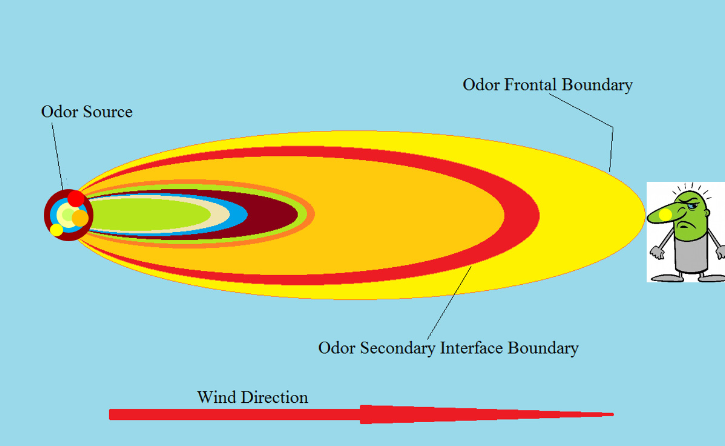
It's called the Rolling Unmasking Effect: "The source is a complex mixture of odorants, yet it is simplified to a single impactful odorant at the receptor downwind. The odor frontal boundary represents the farthest downwind reach of a single compound, while the internal colored ovals represent the boundaries of sequential odor unmasking as the secondary-impact odorants are diluted below their detection/masking concentration levels."

Qualitative Exploration of the ‘Rolling Unmasking Effect’ for Downwind Odor Dispersion from a Model Animal Source. Donald W. Wright et al. International Journal of Environmental Research and Public Health, 2021,18,13085. DOI: 10.3390/ijerph182413085

It's already hard enough to identify odors by their source, but these researchers show us that matching an odor "in the field" to one you think is the source, needs to account for the differentiated dispersal of odorants as the odor plume moves through space.

Just because one odorant scores high on the sniff test --at the source--, doesn't mean that odorant won't be the first to disappear at 10 yards. And just because you smell rotten eggs, doesn't mean that odorant is found in more abundance relative to others at the source, it could be that the rotten egg parts of the smell are better at avoiding dispersal, riding the edge of the odor plume as it emanates from its source. 

Some good terms:
  • rolling unmasking effect
  • downwind odor frontal boundary
  • odorant prioritization 
  • downwind odor impact
  • dynamic dilution olfactormetry

From the paper:

We propose solving environmental odor issues by utilizing troubleshooting techniques developed for the food, beverage, and consumer products industries.

While the composition of environmental odors, as detected by human receptors, carries the potential for extreme complexity, the reality is that there is a high degree of compositional simplification, which typically develops with increasing distance separation from the odor source.

We refer to these two effects as the Rolling Unmasking Effect (i.e., RUE). 

Odors generated from rural and agricultural sources are lowered by "downwind diultion" dispersion strategies, and monitored by dynamic dilution olfactormetry.

There is also broad recognition of a challenge to link specific compounds to resulting downwind odor [10,11]. In one notable example from an odorant prioritization study to the rendering industry [12], just two odorants (trimethylamine (TMA) and dimethylsulfide (DMS)) were identified as the impact-priority odorants downwind of a fish meal processing plant. 

In a more recent study [14,15], these authors were able to identify the specific chemical odorant that is believed primarily responsible for the reported ‘skunky’ odor downwind of dense cannabis-growing operations. ... The compound 3-methyl-2-butene- 1-thiol (i.e., 321 MBT), was the primary source of this ‘skunky’ odor of cannabis [14,15].

This has been shown for p-cresol as a 'sognature' [signature?] downwind odor from confined animal feeding operations (CAFOs), recognizable at a great distance from the source. 

Odors from a large colony of Mexican fee-tailed bats: ammonia, "rat nest",  and "bat cave" or "taco shell", which was dominated by 2-aminoacetophenone, upon approach to the outer ‘odor frontal boundary’; enabled by the decline of odor masking by the quinazoline odorant.

Figure 3. P.T. porcupine encounter in Moody Gardens. (1) Wind direction; (2) odor frontal boundary; (3) approximate secondary (near-source) boundary; (4) investigator's approximate location upon initial encounter and (5) location of outdoor enclosure of the odor source.

PT Porcupine Urine Sampling:

Unfortunately, the panelist (D.W.W.) was unable to confirm the chemical identities of the two character-defining ‘grilled onion’ odorants from the P.T. porcupine environments. Therefore, in a further attempt to identify these unknowns, collaborations with experts in the food flavor/aroma field were engaged.

The near-source smell was perceived as ‘phenolic,’ ‘industrial,’ and ‘foul.’ The dramatic difference in character was particularly surprising considering that only a few paces separated the pleasant 'gilled onion' at the odor frontal boundary and the 'foul' odor deeper into the plume. 

Although the PT porcupine and swine barn sources generate distinctly different odor characteristics at their respective odor boundaries, despite sharing much in common through their VOC emission profiles at the source. 

Focusing on all compounds present at the source often expands the study to include background noise, an unnecessary expenditure if the goal is to reduce downwind environmental odor impact.

One team member did not characterize the odor as 'onion' specifically; instead, it had reminded her of a favorite sauce that her grandmother frequently made. The second team member called the odor character ‘stale onion’.

Post Script:
Here's an odor network for all the odor complaints in southern California circa 2012, via the South Coast Air Quality Management District (SCAQMD)and UCLA post-grad Jane Curren:
Local Odor Vocab

Post Post Script:
Odor wheel for drinking water:
Torrice, M. (adapted from Suffet, M.). The scientists who sniff water. Chem. Eng. News 2017, 95, 16–19.
Suffet, I.H., and P.E. Rosenfeld (2007). The Anatomy of Odour Wheels for Odors of Drinking Water, Wastewater, Compost and the Urban Environment, Water Science and Technology 55(5), 335-344.