Showing posts with label vocs. Show all posts

Tuesday, December 21, 2021

Trans-Epistemological Etymologues - VOC vs VOC


Violating Organic Content - The new VOCs!

For years we have been both addicted to and suspicious of VOCs -- volatile organic compounds. They smell great, like gasoline, baked bread, or bergamot. They can also get into our bloodstream and cause health problems. They evaporate from all kinds of things, and we can measure them with special "VOC meters," although the human nose is by far the most sensitive all-purpose VOC-detector on the market. (Don't forget there are plenty of things that are bad for you that you CAN'T smell at all; and then there's anosmia too.)

But now, a new VOC is on the scene, one potentially far more serious to the survival of our cultural species. They're called "violating organic contents," and they're like little diseases floating around our collective neural network.

Perhaps "floating" is the wrong word. They're jamming your brain via high-frequency algorithms, engineered to reprogram your hardwired hormone circuits of reward and control. Like spores of a Cordyceps mushroom, they invade your neural system, changing the way you think, and using you to propagate itself throughout the network of other-people's-brains. 

You can't smell these VOCs; in fact, even the digital social networks themselves can't seem to detect them very well. We need a better detector for violating organic content (and a better immune system for our collective brain, perhaps some memetic inoculations?). 

Apple threatened Facebook ban over slavery posts on Instagram
Sep 2021, BBC News

Apple threatened to remove Facebook's products from its App Store, after the BBC found domestic "slaves" for sale on apps, including Instagram, in 2019.

"We removed 700 Instagram accounts within 24 hours, and simultaneously blocked several violating hashtags."

It added that it had also developed technology that can proactively find and take action on content related to domestic servitude - enabling it to "remove over 4,000 pieces of violating organic content in Arabic and English from January 2020 to date".

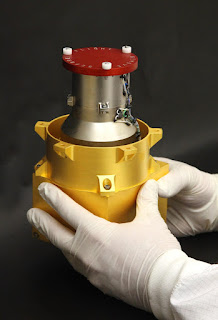
Image credit: That's not a VOC-detector, it's a radiation detector, used by NASA JPL for Mars research.

Partially Related Post Script:
Why cannabis smells skunky
Dec 2021, phys.org

Now, researchers reporting in ACS Omega have discovered a new family of prenylated volatile sulfur compounds (VSCs) that give cannabis its characteristic skunky aroma. 

Prior studies have focused mainly on terpenoids—molecules that range in odor from fuel-like to woody, citrusy or floral.

However, although terpenoids are the most abundant aroma compounds in cannabis, there is little evidence that they provide the underlying skunk-like smell of many cultivars. Skunks use several VSCs in their smelly defense sprays, so Iain Oswald and colleagues suspected that there could be similar molecules in cannabis.

One compound in particular, 3-methyl-2-butene-1-thiol, referred to as VSC3, was the most abundant VSC in the cultivars that the panel reported to be most pungent. This compound has previously been implicated in the flavor and aroma of "skunked beer"—beer that goes bad after being exposed to UV light.

via American Chemical Society: Iain W. H. Oswald et al, Identification of a New Family of Prenylated Volatile Sulfur Compounds in Cannabis Revealed by Comprehensive Two-Dimensional Gas Chromatography, ACS Omega (2021). DOI: 10.1021/acsomega.1c04196


Friday, February 7, 2020

When Do Bad Smells Become Dangerous


You’re looking at a mountain of garbage in India which is slated to become higher than the Taj Mahal.


Dec 2019, nj.com

Before I say anything about bad smells in New Jersey, I should first link you to the absolutely most popular post on this blog, which provides an olfactory tour of the infamous New Jersey Turnpike.

Now onto more current matters. There's a landfill in New Jersey that's been causing problems for its neighboring residents. Actually, there's lots of landfills in NJ, and lots of them cause problems for nearby residents. (See an older post about Tinton Falls and the Smell Hotline.)

The town of Kearny sued the New Jersey Sports and Exposition Authority (NJSEA) last year over health concerns from too much hydrogen sulfide gas. The gas smells like rotten eggs and comes from decaying sheetrock (gypsum board) in the landfill. It was found at levels that exceed state health guidelines, so the town sued, and now the case has been settled: The resolution will permanently close the landfill, cap it, and transform it into a passive recreational space with public access to a nearby marsh.

I've brought this up as an opportunity to talk about smells vs health: Lots of things that smell are bad are also bad for us, but not always, and it's complicated.

Carbon monoxide is lethal and odorless. Isovaleric acid smells like rotten foot fungus and vomit, but it's not going to kill you. The source of the isovaleric acid, however, that might be a bacterial health concern. The "rotten eggs" emanating from your local landfill? Let's take a look at this chart, which I happen to have lying around.


You can detect hydrogen sulfide (H2S) at 0.13 parts per million (ppm). At that level, you won't get immediate effects. But if you're exposed to that level every day, you may get health effects, which explains why the "EPA safe exposure limit" is decimal points lower than that.

But it gets better. At some point, once the H2S reachers 100 ppm, you can no longer smell it. Also around this point, at 500 ppm, it can knock you off your feet. A little higher, at 1,000 ppm, and you might never get back up.

The takeaway from this chart is only to say that you can't rely on smell alone to tell you whether something is safe or not.

Is a smelly landfill next to my house safe? Probably not; but probably not for the reasons of why it smells. Granted, if it's got that much sheetrock that it's pumping 0.13 ppm into the window of your bedroom, then it's a problem.

But don't forget that landfills pose other health concerns besides the gases they emit -- the effluence that slides its way out the bottom of a mountain of trash will be sure to have something of concern in it. Where does that go? Back into your drinking water? Does it wash ashore the floodprone playground where your kids play? Those pollutants you might not smell, but that doesn't make them any less of a problem.


Thursday, May 16, 2019

Crowd Breath

Environmental surveillance is going to change the way we do things around here.

I'll never forget the day I heard Michio Kaku tell me that my toilet bowl would one day know more about me than my doctor. It was one of the most obvious examples, yet something so benign-sounding that it's never offered as a prediction of the future.

Talking toilet bowls do not make the most clickworthy headlines. Or do they? Maybe I'm not the most prescient clickbait writer. Maybe Google already has a patent on the Smart Bowl. (They do, just checked.)

More examples of environmental surveillance are already among us, like any home security system. These systems are listening to your whole house. They might even be listening to your footsteps with their gait-recognition algorithm-ears.

But today we're here to talk about the ability to measure the collective emotional signature of large groups of people. This particular study is innocuous – it looks at the release of isoprene via our breath, and as a result of the physical agitation that we experience when watching an intense film.

The researchers who came up with this stuck a mass spectrometer (basically a human offgassing detector) inside the HVAC of the movie theater, and roll the film. As the crowd reacts, they involuntarily release chemical signals that reveal their emotional state.

This technique is used to gauge the stress-inducing effects of a film, to thereby classify it for various age groups. We don't want kids watching films that are too intense. But you can easily imagine this being used for a multitude of purposes. For example, imagine a school where every classroom is outfitted with this equipment, monitoring the collective stress levels in every room, ready to dispatch a security guard without the need for a teacher to call the principal's office.


Notes:
Oct 2018, Ars Technica

C. Stönner et al, PLoS ONE, 2018

The Future of Humanity, new book (2018) by Michio Kaku

Also check out his radio show on WBAI 99.5FM

Nov 2018, phys.org

Sep 2017, BBC

Post Script:
All this talk of home security does remind me of the ancient Japanese technique of the Nightingale floorboards, which were a lo-fi security device. The placement of tiny metal strips under the floor rub against each other when you walk on them, chirping your arrival.


Tuesday, April 30, 2019

Breath Tech

The Halimeter measures volatile sulfur compounds in the breath down to the parts per billion, and is used to identify the origin of one's bad breath.

It is a common factoid that body odors, particularly our breath, can be used to detect disease. Diabetes is a good example; it smells like acetone (nail polish), which is a result of the metabolism of excess ketones in the blood, which themselves are a result of the burning of fat instead of sugar, a solution the body uses when it has run out of sugar.

The holy grail of disease detection via the breath would be to identify cancer, and early enough that it can be stopped or reversed.

That's exactly what the Breath Biopsy study intends to develop. A large group of people will be chosen to breathe into a sampling vessel, from which their breath will then be sniffed, i.e., scanned for identifiable patterns, and saved for future reference.

Image source
Those people will be tracked into the future. For those who go on to develop cancer, their breath samples will be compared to those who did not develop the disease. The researchers are ultimately trying to find out how far in advance they can detect the cancer breath. This breathalyzer could then become a non-invasive way to identify the disease.

This painting by visionary artist Alex Grey isn’t about breath but about language. Nonetheless I thought it would look good here.

Notes:
Jan 2019, CNN

Post Script:
I will repeat again here a story I find fascinating in regards to identifying disease by smell. I certainly cannot tell you that it's true; it's only meant to enliven discussion:

Although it does not happen often, it does happen that large plots of land previously used as a burial ground must get moved. On one of these occasions, after many days of work, the gravediggers (or whatever is the opposite of a gravedigger) reported markedly different smells coming from the many areas of the cemetery. After looking into it, the different odor-areas could be correlated to disease epidemics in history. Dirt that had been home for a hundred years to those who died during the diphtheria outbreak smelled different than that for tuberculosis.