Showing posts with label fashion. Show all posts

Tuesday, October 20, 2020

Mummy Meat


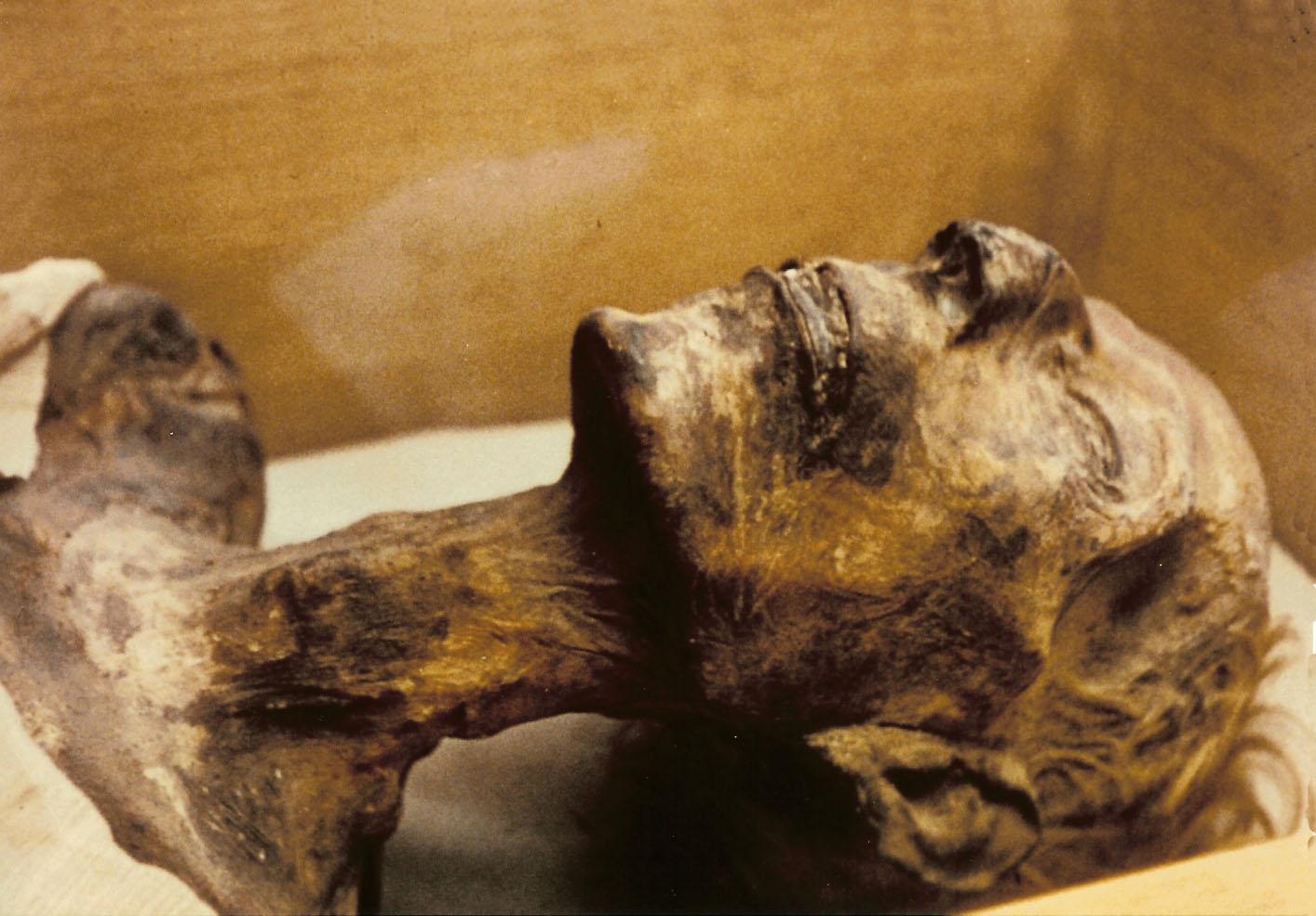
People used to eat mummies.

Last week for the first time, I saw someone else writing about this, but in the spirit of the season, which is Halloween here in the US. Good time for a perennial favorite here at Limbic Signal:

A while back I discovered that people with lots of money and imagination were eating preserved human bodies to get high, about 200 years ago.

I thank Annick Le Guérer for this tidbit, she wrote about it in her book Scent, the Mysterious and Essential Powers of Smell, written in 1988, and translated from French in 1994.

There was a time, we must remember, when mummies were a new thing, never before imagined by the Westerners excavating these immortalized bodies. It's hard to conjure the pretense of shock at something that has been around since long before you were born.

For a moment if you will, try to imagine what it would have been like to learn that deep within the awe-striking pyramidal limestone masses were 3,000-year old physically intact human bodies. This at a time before we had refrigerators! We couldn't even keep a bowl of potato salad from going bad in a couple days, and here's an entire human body with its skin still intact, and older than the entire city in which you live.*

That's magic to a person of the 19th century. Today, our tupperware will probably last longer than our species itself, nevermind the bodies we leave behind. We have plastic flowers for goodness sake. But if you can transport yourself back to a time where everything was ephemeral, you can begin to understand the fascination.

And the exoticism. The preserving substances used on mummies were much less known to Europeans hundreds of years ago. Today we can fly from London to Cairo in four hours. Then, it could have taken up to a month. Today we can have in our pantry any spice produced in any place in the world, within a few days. Things were different then. Egypt in itself was pretty exotic, and mummies, forgetaboutit.

So if you can now picture yourself at an all-nighter in a regal estate, well after midnight, deep into the spirits, when your host spreads on the table these tiny morsels of dry-aged royalty from another era, and who might as well be from another planet, and tells you to dig in – you will be intoxicated. The meat doesn’t make you intoxicated, of course; the idea is enough to placebo the heck out of your dopamine receptors.

I get into the details of how smells are so good at tricking us in this older post. But if you're interested in throwing your own mummy-party, these folks from the University of York have decoded the ancient recipe:

Mummy
-a plant oil –  possibly sesame oil;
-a "balsam-type" plant or root extract that may have come from bullrushes;
-a plant-based gum - a natural sugar that may have been extracted from acacia;
-crucially, a conifer tree resin, which was probably pine resin

*Note that this isn't entirely true, for we have known for a long time about preserving things. Many of the same substances used to preserve mummies also preserve our food. Also note, however, that roughly speaking the practice of using spices to preserve food decreases as you move from the equator, with those places tending to use fermentation as a means of preservation instead, which is the opposite of using spices – one keeps microbial activity at bay, and the other uses it on purpose to regulate the rate of decay. Fermenting mummies would not have worked as well. But that’s pretty tangential, and a transparent excuse to say fermented mummies.

** Know that Europeans are not entirely unfamiliar with mummies; they’re called relics, and they’re not nearly as old.

***Finally, preserving the dead is not the most uncommon thing ever; Japan has a long history of it.


Post Script:
Embalming was just one aspect of preservation. Other steps included:
-Removal of the brain - possibly using a "whisking" process to cause the brain to liquefy
-Removal of the internal organs
-Putting the body into a natural salt to dry it out
-Coating the body in the embalming recipe , to kill bacteria and to seal it
-Wrapping the body in linen


Notes:
Aug 2018, BBC

Nov 2016, Limbic Signal

Feb 2016, Network Address

Apr 2017, Network Address

Japanese Mummies

Thursday, November 8, 2018

Mummy Meat


People used to eat mummies.

A while back I discovered that people with lots of money and imagination were eating preserved human bodies to get high, about 200 years ago.

I thank Annick Le Guérer for this tidbit, she wrote about it in her book Scent, the Mysterious and Essential Powers of Smell, written in 1988, and translated from French in 1994.

There was a time, we must remember, when mummies were a new thing, never before imagined by the Westerners excavating these immortalized bodies. It's hard to conjure the pretense of shock at something that has been around since long before you were born.

For a moment if you will, try to imagine what it would have been like to learn that deep within the awe-striking pyramidal limestone masses were 3,000-year old physically intact human bodies. This at a time before we had refrigerators! We couldn't even keep a bowl of potato salad from going bad in a couple days, and here's an entire human body with its skin still intact, and older than the entire city in which you live.*

That's magic to a person of the 19th century. Today, our tupperware will probably last longer than our species itself, nevermind the bodies we leave behind. We have plastic flowers for goodness sake. But if you can transport yourself back to a time where everything was ephemeral, you can begin to understand the fascination.

And the exoticism. The preserving substances used on mummies were much less known to Europeans hundreds of years ago. Today we can fly from London to Cairo in four hours. Then, it could have taken up to a month. Today we can have in our pantry any spice produced in any place in the world, within a few days. Things were different then. Egypt in itself was pretty exotic, and mummies, forgetaboutit.

So if you can now picture yourself at an all-nighter in a regal estate, well after midnight, deep into the spirits, when your host spreads on the table these tiny morsels of dry-aged royalty from another era, and who might as well be from another planet, and tells you to dig in – you will be intoxicated. The meat doesn’t make you intoxicated, of course; the idea is enough to placebo the heck out of your dopamine receptors.

I get into the details of how smells are so good at tricking us in this older post. But if you're interested in throwing your own mummy-party, these folks from the University of York have decoded the ancient recipe:

Mummy
-a plant oil –  possibly sesame oil;
-a "balsam-type" plant or root extract that may have come from bullrushes;
-a plant-based gum - a natural sugar that may have been extracted from acacia;
-crucially, a conifer tree resin, which was probably pine resin

*Note that this isn't entirely true, for we have known for a long time about preserving things. Many of the same substances used to preserve mummies also preserve our food. Also note, however, that roughly speaking the practice of using spices to preserve food decreases as you move from the equator, with those places tending to use fermentation as a means of preservation instead, which is the opposite of using spices – one keeps microbial activity at bay, and the other uses it on purpose to regulate the rate of decay. Fermenting mummies would not have worked as well. But that’s pretty tangential, and a transparent excuse to say fermented mummies.

** Know that Europeans are not entirely unfamiliar with mummies; they’re called relics, and they’re not nearly as old.
***Finally, preserving the dead is not the most uncommon thing ever; Japan has a long history of it.


Post Script:
Embalming was just one aspect of preservation. Other steps included:
-Removal of the brain - possibly using a "whisking" process to cause the brain to liquefy
-Removal of the internal organs
-Putting the body into a natural salt to dry it out
-Coating the body in the embalming recipe , to kill bacteria and to seal it
-Wrapping the body in linen


Notes:
Aug 2018, BBC

Nov 2016, Limbic Signal

Feb 2016, Network Address

Apr 2017, Network Address

Japanese Mummies

Wednesday, November 9, 2016

Mummy-Eaters


People used to eat mummies, back in the 1800’s. Image source: wikimedia

The mysterious always has a way of wiggling past our common sense. When mummies were first discovered by the West, they were the height of public wonder. To preserve a body forever, and in such a way, was a shock to the imagination. The powerful aromatics used in mummification enticed curious people with lots of money to buy the craziest thing out there – mummy meat.

Eventually, with the initial mother lode of mummies exhausted, and the market still demanding more, opportunists arrived – entrepreneurs, perhaps. They impregnated recent cadavers with aromatic substances, wrapped them up, and aged them until the time was right, when they would be passed-off as authentic Egyptian mummy meat. People devoured its wonderment all the same. It was claimed to have special effects on those who ate it. But what was more intoxicating, the meat, or its mystery?

One thing is for sure – the smell of spice, incense, the eternal, and the foreign gave tangible credibility to such claims.

This story is taken from Annick Le Guérer’s Scent, the Mysterious and Essential Powers of Smell, written in 1988, translated from French in 1994.

Excerpt from Hidden Scents:
Odors only stimulate memory; they do not cause any other reactions by themselves. When one feels sick in the presence of an odor, it is not because of the odor itself but because of its association with previous sickness. Automobile exhaust smells and is deadly, but it is not deadly because it smells. The odor sensorium has no capacity for discriminating toxic from nontoxic substances. Odors are epiphenomenal, without any direct biological effect other than that on the olfactory system. Still, the powerful illusion that they cause pleasure and pain persists. Even when one knows that it was drinking too much whiskey that made one sick, the smell of it remains aversive as though it were the cause.* Because smell-response is learned, it only makes sense that upon repeated exposure to a smell, noxious or not, its alarming effect would wear off over time. Why else would you still be in its presence – “it mustn’t be dangerous” – and is therefore turned off, like a smoke alarm, disabled upon accidentally burning breakfast. Cognition is practically defined by its ability to move beyond this reliance on false alarms – it generates methods of identification completely unattainable in the detail and at the distance (both spatial and temporal) than that which is offered by olfaction.

*This is not to be confused with a “smell” that is trigeminally noxious. Mustard gas stimulates trigeminal nerves, not olfactory nerves. In fact, a good way to disambiguate smell from trigeminality is to determine whether it physically hurts. Smells do not hurt, they remind us of pain, but they do not physically cause pain.