Showing posts with label peer pressure. Show all posts

Tuesday, October 20, 2020

Mummy Meat


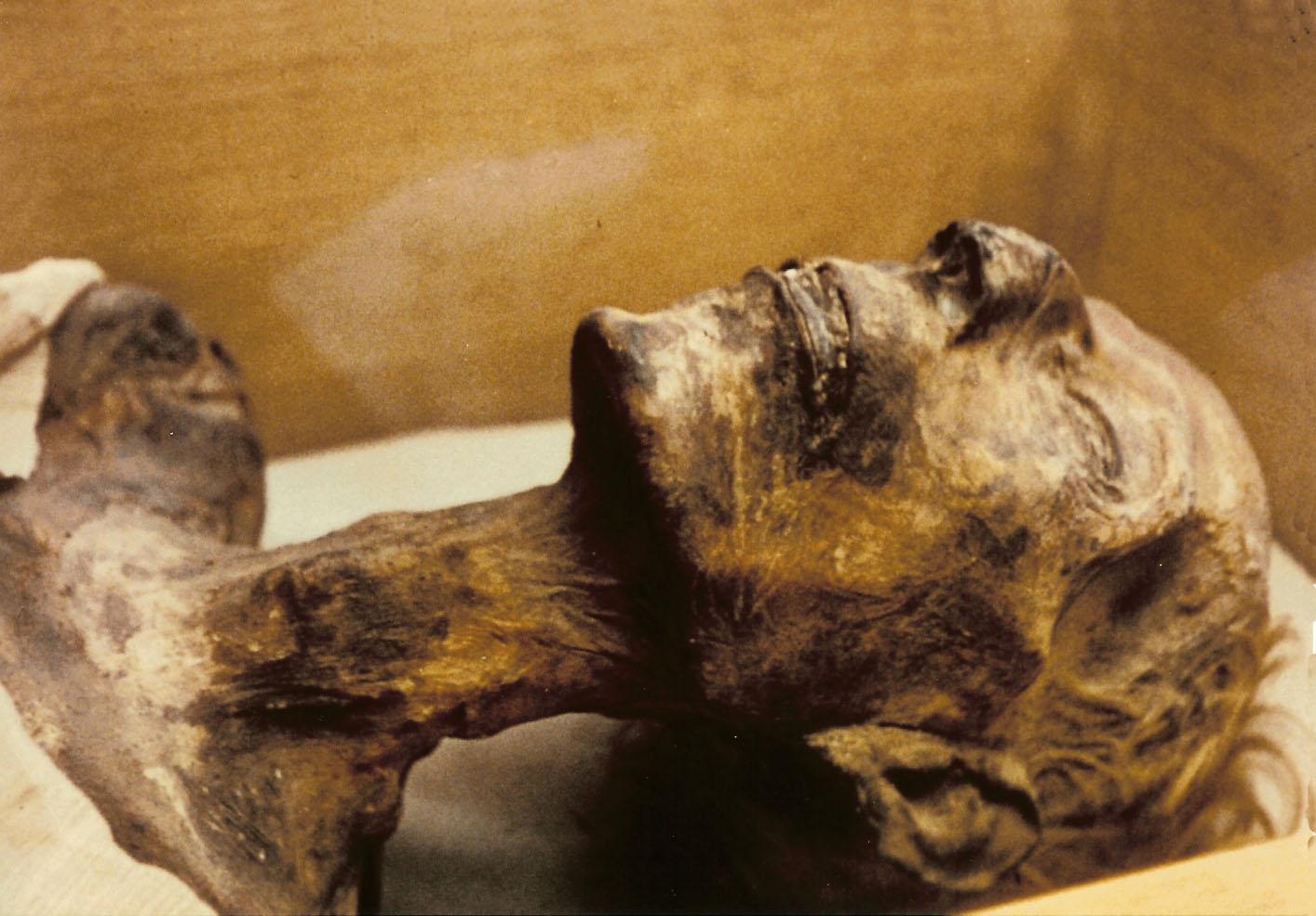
People used to eat mummies.

Last week for the first time, I saw someone else writing about this, but in the spirit of the season, which is Halloween here in the US. Good time for a perennial favorite here at Limbic Signal:

A while back I discovered that people with lots of money and imagination were eating preserved human bodies to get high, about 200 years ago.

I thank Annick Le Guérer for this tidbit, she wrote about it in her book Scent, the Mysterious and Essential Powers of Smell, written in 1988, and translated from French in 1994.

There was a time, we must remember, when mummies were a new thing, never before imagined by the Westerners excavating these immortalized bodies. It's hard to conjure the pretense of shock at something that has been around since long before you were born.

For a moment if you will, try to imagine what it would have been like to learn that deep within the awe-striking pyramidal limestone masses were 3,000-year old physically intact human bodies. This at a time before we had refrigerators! We couldn't even keep a bowl of potato salad from going bad in a couple days, and here's an entire human body with its skin still intact, and older than the entire city in which you live.*

That's magic to a person of the 19th century. Today, our tupperware will probably last longer than our species itself, nevermind the bodies we leave behind. We have plastic flowers for goodness sake. But if you can transport yourself back to a time where everything was ephemeral, you can begin to understand the fascination.

And the exoticism. The preserving substances used on mummies were much less known to Europeans hundreds of years ago. Today we can fly from London to Cairo in four hours. Then, it could have taken up to a month. Today we can have in our pantry any spice produced in any place in the world, within a few days. Things were different then. Egypt in itself was pretty exotic, and mummies, forgetaboutit.

So if you can now picture yourself at an all-nighter in a regal estate, well after midnight, deep into the spirits, when your host spreads on the table these tiny morsels of dry-aged royalty from another era, and who might as well be from another planet, and tells you to dig in – you will be intoxicated. The meat doesn’t make you intoxicated, of course; the idea is enough to placebo the heck out of your dopamine receptors.

I get into the details of how smells are so good at tricking us in this older post. But if you're interested in throwing your own mummy-party, these folks from the University of York have decoded the ancient recipe:

Mummy
-a plant oil –  possibly sesame oil;
-a "balsam-type" plant or root extract that may have come from bullrushes;
-a plant-based gum - a natural sugar that may have been extracted from acacia;
-crucially, a conifer tree resin, which was probably pine resin

*Note that this isn't entirely true, for we have known for a long time about preserving things. Many of the same substances used to preserve mummies also preserve our food. Also note, however, that roughly speaking the practice of using spices to preserve food decreases as you move from the equator, with those places tending to use fermentation as a means of preservation instead, which is the opposite of using spices – one keeps microbial activity at bay, and the other uses it on purpose to regulate the rate of decay. Fermenting mummies would not have worked as well. But that’s pretty tangential, and a transparent excuse to say fermented mummies.

** Know that Europeans are not entirely unfamiliar with mummies; they’re called relics, and they’re not nearly as old.

***Finally, preserving the dead is not the most uncommon thing ever; Japan has a long history of it.


Post Script:
Embalming was just one aspect of preservation. Other steps included:
-Removal of the brain - possibly using a "whisking" process to cause the brain to liquefy
-Removal of the internal organs
-Putting the body into a natural salt to dry it out
-Coating the body in the embalming recipe , to kill bacteria and to seal it
-Wrapping the body in linen


Notes:
Aug 2018, BBC

Nov 2016, Limbic Signal

Feb 2016, Network Address

Apr 2017, Network Address

Japanese Mummies

Tuesday, September 3, 2019

Mind Control


It should come as no surprise that we look to others to help us make decisions, whether they're life-changing or everyday decisions. In a new study, we see that when mice choose what to eat, they utilize "taster mice" in their group that are the first to eat from a new food source.

I'm not sure what makes one a taster-mouse in the first place, but they do exist. In order for mice to decide at the colony level whether they should be eating from a certain food source, they don't ask their friends, and they don't check their newsfeed. Instead they use the smell of taster-mice whiskers.

In reality, mice don't do anything. Their brains are programmed by the smell of the taster-mice to steer them towards some food sources and away from others. Their repeated olfactory interactions with the taster mice and the social network they subsequently inform will rewire the neural network in their prefrontal cortex – the place where decisions are made. This alteration links the olfactory cue from the taster-mice to the reward center in the brain, which then motivates the mice to find that smell again.

We can think of all preference as following a similar pattern of social interaction and propagation. Taster-mice function as hubs of their social network. The difference is that humans are a bit more sophisticated. Instead of just transmitting the smell of safe, available food, the hubs of human networks spread styles, preferences, ideas, and information in general.

The interesting corollary is that in mice, the olfactory cues are literally re-wiring the pleasure-seeking centers of their brains, whereas in humans, all kinds of cues can redirect our behaviors. Olfaction is already known to be so tightly integrated with our decision-making and reward centers, but when the actual process by which this takes place is extrapolated to other senses, it suggests that we are way less in control of our own thoughts, desires and behaviors than we may think.


Notes
June 2019, phys.org

Post Script
By the way, casually mentioned in the article that presented this study, was the practice of "erasing memories" in the mice in the study. It's a technique used in optogenetics where a single neuron is zapped. I'm pretty sure it was only a few years ago that we first heard of this technique, and now it's just thrown in there like de rigueur. Eternal Sunshine here we come!

Post Post Script
On Mimetic Desire:
"All desire is a desire to be [someone else]"
-Rene Girard, Quand ces choses commenceront ... Entretiens avec Michel Treguer. Paris: arléa. ISBN 2-86959-300-7. p28. 1994.

Thursday, November 8, 2018

Mummy Meat


People used to eat mummies.

A while back I discovered that people with lots of money and imagination were eating preserved human bodies to get high, about 200 years ago.

I thank Annick Le Guérer for this tidbit, she wrote about it in her book Scent, the Mysterious and Essential Powers of Smell, written in 1988, and translated from French in 1994.

There was a time, we must remember, when mummies were a new thing, never before imagined by the Westerners excavating these immortalized bodies. It's hard to conjure the pretense of shock at something that has been around since long before you were born.

For a moment if you will, try to imagine what it would have been like to learn that deep within the awe-striking pyramidal limestone masses were 3,000-year old physically intact human bodies. This at a time before we had refrigerators! We couldn't even keep a bowl of potato salad from going bad in a couple days, and here's an entire human body with its skin still intact, and older than the entire city in which you live.*

That's magic to a person of the 19th century. Today, our tupperware will probably last longer than our species itself, nevermind the bodies we leave behind. We have plastic flowers for goodness sake. But if you can transport yourself back to a time where everything was ephemeral, you can begin to understand the fascination.

And the exoticism. The preserving substances used on mummies were much less known to Europeans hundreds of years ago. Today we can fly from London to Cairo in four hours. Then, it could have taken up to a month. Today we can have in our pantry any spice produced in any place in the world, within a few days. Things were different then. Egypt in itself was pretty exotic, and mummies, forgetaboutit.

So if you can now picture yourself at an all-nighter in a regal estate, well after midnight, deep into the spirits, when your host spreads on the table these tiny morsels of dry-aged royalty from another era, and who might as well be from another planet, and tells you to dig in – you will be intoxicated. The meat doesn’t make you intoxicated, of course; the idea is enough to placebo the heck out of your dopamine receptors.

I get into the details of how smells are so good at tricking us in this older post. But if you're interested in throwing your own mummy-party, these folks from the University of York have decoded the ancient recipe:

Mummy
-a plant oil –  possibly sesame oil;
-a "balsam-type" plant or root extract that may have come from bullrushes;
-a plant-based gum - a natural sugar that may have been extracted from acacia;
-crucially, a conifer tree resin, which was probably pine resin

*Note that this isn't entirely true, for we have known for a long time about preserving things. Many of the same substances used to preserve mummies also preserve our food. Also note, however, that roughly speaking the practice of using spices to preserve food decreases as you move from the equator, with those places tending to use fermentation as a means of preservation instead, which is the opposite of using spices – one keeps microbial activity at bay, and the other uses it on purpose to regulate the rate of decay. Fermenting mummies would not have worked as well. But that’s pretty tangential, and a transparent excuse to say fermented mummies.

** Know that Europeans are not entirely unfamiliar with mummies; they’re called relics, and they’re not nearly as old.
***Finally, preserving the dead is not the most uncommon thing ever; Japan has a long history of it.


Post Script:
Embalming was just one aspect of preservation. Other steps included:
-Removal of the brain - possibly using a "whisking" process to cause the brain to liquefy
-Removal of the internal organs
-Putting the body into a natural salt to dry it out
-Coating the body in the embalming recipe , to kill bacteria and to seal it
-Wrapping the body in linen


Notes:
Aug 2018, BBC

Nov 2016, Limbic Signal

Feb 2016, Network Address

Apr 2017, Network Address

Japanese Mummies