Thursday, October 13, 2022

Headlines in the Smell World


Scientists thought they knew how the nose 'knows,' but new research suggests otherwise
Aug 2022, phys.org

I'm not doing a great job following this development, a reversal rather -- there's apparently some reconsideration that needs to be given to the way odorous molecules activate their respective olfactory receptors. Smell is the most understudied of all our senses, so it should be less of a surprise that one of the foundationary hypotheses of olfactory science needs some fine-tuning: 

G protein signal amplification is actually very low—so low that the probability of an odorant receptor activating just one G protein would be perhaps only 1 in 10,000. Yau said that, as such, the activation level "is very weak."

On a sidenote, what really stands out to me from this article is that the rhodopsin in the photosensitive cells on your retina (and all over your body in fact) are so sensitive they can detect a single photon of light. One single photon. And I thought our nose was sensitive. (It is, but for chemicals; the eye, and the photoreceptors in it, are for detecting the electromagnetic radiation beaming through our solar system.)

via Johns Hopkins University School of Medicine: Rong-Chang Li et al, Low signaling efficiency from receptor to effector in olfactory transduction: A quantified ligand-triggered GPCR pathway, Proceedings of the National Academy of Sciences (2022). DOI: 10.1073/pnas.2121225119


Friends at first sniff: People drawn to others who smell like them
Jun 2022, phys.org

The researchers found that the odor signatures of "click friends" were statistically more closely matched than odors between non-friends.
This study was done using the T-shirt test, an old trusty in smell science. 

I can't figure out which is more interesting here. The word "click friends" is pretty cool, never heard it. But this one is good: "Nonhuman terrestrial mammals constantly sniff themselves and each other and, based on this, decide who is friend or foe," wrote a group of researchers led by Inbal Ravreby at Weizmann Institute of Science in Israel.

"I don't sniff myself; I am not an animal; gross" as you completely obliviously brush your hair away from your face, or scratch your temple. The study that proved our absolute inability to avoid smelling our own hands (and the hands of everyone we meet, by way of our own hands that shook theirs) found that BEFORE the study even started, while people were still in the waiting room, they had their hand ready next to their nose 22% of the time! (see older post and the article itself). Filthy animals!

via Weizmann Institute of Science in Israel: Inbal Ravreby et al, There is chemistry in social chemistry, Science Advances (2022). DOI: 10.1126/sciadv.abn0154


People who consider olfaction important and actively sniff other's odors have stronger sexual desire
Aug 2022, phys.org

This study is based on questionnaires given to Chinese college students, and recall that there is a general understanding in the smell world that Asian people tend to not have the same scent-emitting glands as non-Asians; in other words, the deodorant market doesn't work very well in China. After their initial findings however, they started over and sent the same questionnaires to college students in both the U.S. and in India, and after all that:

  • Students who reported giving high value to olfaction or who actively sniffed other people also reported having a stronger sexual desire than others who responded.
  • Women tended to place more emphasis on smell than men, and reported lower levels of sexual desire in general.
  • Men in India reported stronger sexual desire than those in China and the U.S., and they also reported placing more importance on olfaction.  

A final thought -- culture in some ways can be a stronger mediator for olfactory perception than biology or genetics. Science like this is great, but it's only s very small piece of the full picture. I'm thinking of how the Marshmallow Test fell apart in a recent study because they considered that Japanese kids are conditioned to wait for everyone to be ready to eat at the dinnertable, and U.S. kids are not. 

via Southern Medical University in China and Technische Universität Dresden in Germany: Zi-lin Li et al, Sniffing of Body Odors and Individual Significance of Olfaction Are Associated with Sexual Desire: A Cross-Cultural Study in China, India, and the USA, Archives of Sexual Behavior (2022). DOI: 10.1007/s10508-022-02398-1


Rapid loss of smell predicts dementia and smaller brain areas linked to Alzheimer's
Jul 2022, phys.org
 
(But how about their sexual desire??)

via University of Chicago Medicine: Rapid olfactory decline during aging predicts dementia and GMV loss in AD brain regions, Alzheimer s & Dementia (2022). DOI: 10.1002/alz.12717


New study reveals where memory fragments are stored
Jul 2022, phys.org

This is about memory recall, the way we access memories stored in our brains, and it certainly does change the olfactory science, since we tend to consider olfaction as being deeply connected to our autobiographical memory via the hippocampus, which it is, but this suggests there are more olfactory details being stored in the prefrontal cortex than we thought:

While the overall experience is stored in the hippocampus, the brain structure long considered the seat of memory, the individual details are parsed and stored elsewhere, in the prefrontal cortex. This separation ensures that, in the future, exposure to any individual cue is sufficient to activate the prefrontal cortex, which then accesses the hippocampus for recall of the whole memory.

via Laboratory of Neural Dynamics and Cognition at Rockefeller University and Weill Cornell Medicine: Priyamvada Rajasethupathy, Prefrontal feature representations drive memory recall, Nature (2022). DOI: 10.1038/s41586-022-04936-2

Friday, October 7, 2022

Perceptual Cartography


This piece of news from from the Monell Chemical Senses Center, and it's supposed to be about how we can predict whether a molecule will have an odor or not. For example, the molecule for water, H2O, does not have a smell. Neither does a molecule of iron. Water smells, like all different kinds of things, and so does metal, but it's because of the fact that you can't find a place on Earth where life doesn't live, and life smells. So that includes how we deposit our skin flora on loose change and handrails, where select families of microbes proliferate in the microscopic textures and pores of the metal. Or how water can have any number of living (or dying) things in it, many of which can smell. And that's all because living things are walking, breathing chemical reactor factories that transforms molecules like their life depends on it, and these transformations give us single molecules of let's say isovaleric acid or cineole or delta-decalactone that offgas from the collective biosphere. 

But if we were to take any molecule, chosen at random, we don't have a good checklist to guess whether it will smell or not. And there's plenty of molecules still out there for us to discover, so how do we know where to start? That's where this study comes in. And for that purpose, it seems like it could be pretty helpful.

That's not what makes this article interesting to us here at Limbic Signal however. Instead, let's look at how this research tries to map out the information space of olfaction.

Information space is a hard concept to wrap your head around, because you're a meatbag bounded by the three dimensions of conventional reality (unless you're a robot reading this, of course). The entry point to discussions about perceptual information space start with vision. Is it light or dark, on a scale of one to ten, one being white and ten being black. That's one dimension where the space is a single line, and our "color" then exists somewhere along that line. 

Next, where does it fall on the rainbow, a spiraling spectrum that gradually changes from red to orange to yellow to green etc, each of which can be measured by it' radiating energy. Conveniently, the end can be shifted back to the beginning, so that after blue turns to violet, it keeps going, and we think we're approaching the end, but then violet starts to look like red, and we're back to the beginning again.

This gives us two dimensions, the light-dark and the rainbow (it's called hue but I'll call it rainbow here since it's a more familiar term. Color then has a light-dark number and a rainbow number, like an X-axis and a Y-axis, and any particular color exists at the intersection of these axes. This intersection is the information space of color. (There's typically an extra dimension used, called brightness or saturation, but let's just stop here.)

This information space allows us to group together similar colors, and to create different organizations of color combinations, based on color theory for example. And we can use charts that visualize this information space, so that we can communicate with each other about colors. Because as humans, we like to communicate about things. Some might say our ability to communicate, especially using verbal language, is what makes us human. 

But smells have a problem. There's no way to organize them, except to split them into "good" or "bad" categories, and since each of us has slightly and sometimes dramatically different opinions about whether a smell is good or bad, well, that distinction isn't very helpful.

Hot smells and cold smells? That doesn't mean anything. Wet and dry? (There's something here actually, related to chemical reactions that can and cannot take place underwater, because our sense of smell has been with us since we were fish, and now we're not, but we still hold some of that history.) It just doesn't work. Fruity, cheesy and burnt? Ok great, now what about the rest? And do they fit on a spectrum like the wavelengths of visible electromagnetic radiation? No they don't. 

Odor space is hard because instead of two dimensions like color (three really but who's counting), there are as many dimensions for smells as there are smells (and that's a lot). And that's just not very helpful if what we're trying to do is collapse the information, to make it easier to look at, think about, talk about...

And that's why this new research from Monell is so interesting, because it is one of the first comprehensive maps of odor space. It's huge, but it's useful because we've now managed to cross-off an even bigger world of molecules that simply can't be smelled.


What Makes a Molecule Smell?
Jul 2022, Monell Chemical Senses Center

Smell scientist Richard Gerkin produced a visualization of the odor space showing the universe of possible molecules and the regions of that universe where odorous molecules live.
http://secure-ocean-16110.herokuapp.com/

A smell needs to be:
  • Volatile enough evaporate from the surface of its source
  • Not too volatile to still pass through the mucus layer coating the olfactory epithelium
  • Hydrophobic enough to escape the mucus layer and enter the binding pockets of olfactory receptors

via Monell Chemical Senses Center: Transport features predict if a molecule is odorous. Emily J. Mayhew et al. PNAS. April 4, 2022. 119 (15) e2116576119


Thursday, August 4, 2022

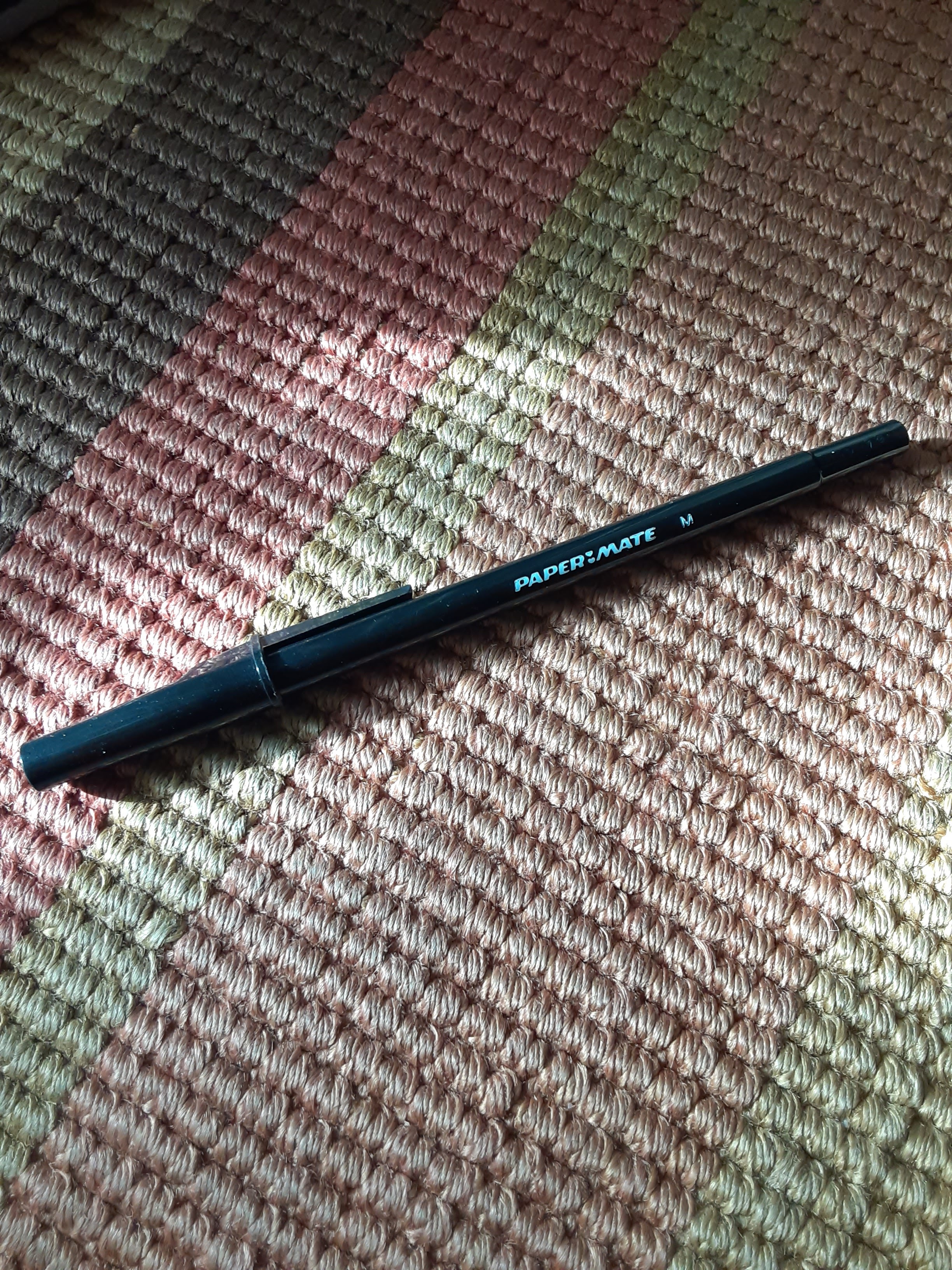
Termite NASCAR - Bic Pens and Ants


2-phenoxyethanol is the chemical name of a solvent that helps ink dry quickly, but also mimics an ingredient in termite "trail pheromone;" it helps them follow each other. 

It's used in both blue and black ink, and from either Bic or Papermate pens. Its primary use is in middle school science projects, to teach kids how pheromones work. You use this pen to write your name on a piece of paper, then drop some termites on there, and watch as your name is spelled in ants. 

Notes:
The Trail Pheromone of the Termite, Trinervitermes trinervoides. Tschinkel, Walter R.; Close, Peter G. (1972). J. Insect Physiol. Vol 19. pp. 707-721.

^This 1972 study says that "activity loss from filter paper is approximately exponential with a half-life of about 2 hr" in case you were wondering.

The Identification of 2-Phenoxyethanol in Ballpoint Inks Using Gas Chromatography/Mass Spectrometry – Relevance to Ink Dating. Laporte, Gerald & D Wilson, Jeffrey & Cantu, Antonio & Amanda Mancke, S & L Fortunato, Susan. (2004). Journal of Forensic Sciences. 49. 155-9. doi:10.1520/JFS2003217

^And why is this article published on the ASTM website? And with all the references listed as working for United States Secret Service, Forensic Division?  Because you can tell how old a document is by measuring the amount of this chemical that is left in the ink. 

Post Script:
Just pheromone things - "Seducin" - Some male cockroaches and crickets produce a pheromone called seducin from their bodies, on which the females nibble during copulation. This pheromone is an aphrodisiac. 


Tuesday, July 26, 2022

Avery Gilbert and the Terpene Revolution


He's calling the terpene revolution "the nucleus of the brand new field of cannabis psychophysics" (First Nerve, Feb 2021) and I can't argue because he is the first, and when you're the first, you get to name things.

Here's a quick run-down of Avery Gilbert's work circa terpenes since 2018. (Note that he was the first person to get federal approval for olfactory research on pot.)

Consumer perceptions of strain differences in Cannabis aroma, Feb 2018

The smell of marijuana (Cannabis sativa L.) is of interest to users, growers, plant breeders, law enforcement and, increasingly, to state-licensed retail businesses. The numerous varieties and strains of Cannabis produce strikingly different scents but to date there have been few, if any, attempts to quantify these olfactory profiles directly. Using standard sensory evaluation techniques with untrained consumers we have validated a preliminary olfactory lexicon for dried cannabis flower, and characterized the aroma profile of eleven strains sold in the legal recreational market in Colorado. We show that consumers perceive differences among strains, that the strains form distinct clusters based on odor similarity, and that strain aroma profiles are linked to perceptions of potency, price, and smoking interest.

Use of rating scales versus check-all-that-apply ballots in quantifying strain-specific Cannabis aroma, March 2019

Previous research using a check-all-that-apply (CATA) method to describe the strain-specific aroma of dried Cannabis flower revealed two major clusters, one characterized as woody, earthy, herbal and the other as citrus, lemon, sweet, and pungent. In this study, participants rated 10 strains (including seven strains not previously tested) using numeric rating scales and a slightly smaller set of odor descriptors. The results confirm the two major scent clusters, and indicate a possible intermediate cluster differentiated by a skunk note. We observed systematic variation in the use of descriptors and rating scales: evaluators who used more odor descriptors tended to assign higher scale ratings. Nevertheless, the CATA and rating scale methods yielded similar results.

Human olfactory detection of packaged cannabis, March 2020

Olfactory detection of cannabis aroma by police officers can be the basis for warrantless searches of motor vehicles in many jurisdictions in the United States. The odor source in these cases is often dried cannabis flower contained in various casual wrappings as well as in more elaborate packaging. Here we investigate whether packaging format alters the detectability of the cannabis. Two cannabis strains and five packaging formats were evaluated. Untrained observers were presented with two containers and asked to identify, based only on smell, the container that held a sample of packaged cannabis (the other container held identical, but empty, packaging material). The results showed that open and casually packaged cannabis was identified with high accuracy, while material packaged in doubly vacuum-sealed plastic was correctly identified at rates no different from chance. The results may help address issues involving the detectability of cannabis aroma in law enforcement and other scenarios.

Tuesday, July 19, 2022

Neural Waves Ahoy


We're getting a lot of amazing brain data from epilepsy science these days (like the first evidence of brain death under EEG). 

Because epilepsy patients undergo an entire week of EEG monitoring prior to treatment (so the doctors can "get familiar with" their brainwaves), other scientists ask to bother them with experiments that have nothing to do with epilepsy. Like olfaction experiments. So the patients volunteer to have the data from their brainwave monitoring used by researchers while they squirt smell molecules at their face. 


Olfactory processing in three distinct neural waves
Feb 2022, phys.org

Now we ask whether different oscillations represent distinct features of an odor, or if different odors are represented by different oscillations," Zelano said

They're talking about neural oscillations. 

Neurons in visual and auditory systems usually operate at a background hum of excitability, but when the brain is trying to see or hear something, these neurons are activated in sync.

But the olfactory cortex is hard to study because it's literally in the center of the brain (and that's because it is like the seed from which our big ass brain grew out of). Brainwaves can be detected non-invasively, so that's great. 

The low-frequency oscillations, termed theta waves, begin immediately after a volunteer sniffed and ended immediately afterwards. Theta waves were followed by two more sets of waves, beta (about 12-30 Hz) and gamma waves (above 30 Hz).

This raises the possibility of a two-step process, where the low-frequency waves "prime" the olfactory cortex and the high-frequency waves are responsible for olfactory processing.

"Low-frequency waves are used for communications between brain regions and high frequency oscillation is more involved in local computations, but it's very exciting to find a low-frequency oscillation motivating a high-frequency oscillation," said Guangyu Zhou, Ph.D., research assistant professor of Neurology and a co-corresponding author of the study.

Oh but this part is even better:

Further, the strength of the high-frequency waves was associated with volunteers' ability to correctly identify odors.

"This implies the higher-frequency oscillations are required to actually distinguish the odor one is smelling," Qiaohan Yang, MS, student in the Northwestern Interdepartmental Neuroscience Program (NUIN) and lead author of the study.

via Northwestern University's Comprehensive Epilepsy Center: Qiaohan Yang et al, Smell-induced gamma oscillations in human olfactory cortex are required for accurate perception of odor identity, PLOS Biology (2022). DOI: 10.1371/journal.pbio.3001509


Post Script, On Epilepsy:
Who knew that treating epilepsy would lead to such novel discoveries? Why is C. elegans or D. melonigaster so important for specific things, or how is the naming of the limbic system itself a kind of word-monster that grew out of our heavy reliance on rats during the concurrent explosion of olfactory science in the Behavioral era, and rats have a brain that is dominated by olfaction, and it basically controls the movements of their body, hence their limbs, and so the olfactory system was called the limbic system. Why rats? Why fruitflies? Why epilepsy? 

Life may actually flash before your eyes on death
Feb 2022, BBC News

First-ever recording of a dying brain discovered by accident. 

"This was actually totally by chance, we did not plan to do this experiment or record these signals."

This is also one of the reasons why it is important to care for every human equally, regardless of what happened to them. You're born without an immune system? We're keeping you alive as long as we can. Paraplegic? We're giving you wifi for your body

You have epilepsy? We're going to slap some electrodes to your head and monitor your brainwaves for a really, really long time, and figure out how to help you. Unless you have a heart attack in the headset, in which case we'll watch what happens, and use your accident to further the advancement of science. 

via Department of Neurosurgery, Henan Provincial People’s Hospital, Division of Neurosurgery, Vancouver General Hospital: Vicente Raul et al. Enhanced Interplay of Neuronal Coherence and Coupling in the Dying Human Brain. Frontiers in Aging Neuroscience 14 2022. DOI: 10.3389/fnagi.2022.813531.

Why C. elegans? They have only 302 neurons, that's why.

Tuesday, July 12, 2022

What Have We Become


It appears that we could be evolving to better tolerate each other's body odor by having our noses become less sensitive to that smell over time. And the guy in the picture above has been "evolved" to withstand a car crash.

Humans and other primates have evolved less sensitive noses
Feb 2022, phys.org

*Update Oct 20 2022: Didn't realize this study was prompted by Unilever trying to break into the Asian market; they thought maybe there's a problem with the genetics; turns out that's not it; but the Asian population does have less odor-producing glands in their armpits, which, presumably, is what leads to less sales in fragrance products like deodorant; or cultural expectations makes some people less likely to want to stand out. -Abigail Tucker for the Smithsonian, Oct 2022 

The purpose of this study was to see if the genetics for smell remain constant across people from different backgrounds other than the Caucasians typically studied. 

The results showed that yes, they do, but also something unexpected.

"People with the ancestral versions of the scent receptors tend to rate the corresponding odor as more intense." And in opposition, the "newer" versions of those receptors lead to people having less intense odor detection capacity. And this suggests that we are evolving to be less sensitive to odors. 

In order to test their hypothesis, they used odors that were already known to be variable in the ways people perceive them. For example, some smells are very intense to some people but barely perceptible to others. Some of this is because of genetic variations in the way the receptor works. 

An interesting aside in the discussion -- "OR51B2 variation drives differences in the perception of human body odor component 3-methyl-2-hexenoic acid (3M2H) ... which could be a target for future studies interested in malodor blocking, or discovering the mechanisms underlying social communication from body odor."

Back to the big part of this study, which is the unexpected part (always the favorite part of any scientific endeavor). They measured the "age" of these genes, and found that the "newer" genes were less sensitive to intensity, and refer to this as "Degeneration of olfactory receptor gene repertoires in primates."

Image credit: Graham is designed to survive a car crash, Victoria’s Transport Accident Commission, 2016. Designed by Melbourne sculptor Patricia Piccinini, Royal Melbourne hospital trauma surgeon Christian Kenfield, and crash investigator at Monash University’s accident research centre David Logan.

Bonus:
Large genetic databases can be used to understand OR function, a proxy for general protein function.

In the discovery study, we may have the benefit of measuring olfactory phenotypes in a large, homogenous cohort (Fig 1) where genome-wide genotyping had already been conducted, giving us the statistical power of a large population without the time or expense. In this study, the novel signals do not have much population differences in MAF or effect size (Table 1 and Figs 3 and 4), suggesting that the large sample size rather than its genetic similarity might be the more important reason behind the findings. Given the increasing number of open databases of sequencing data, this method is becoming a more reasonable possibility for easily testing genotype/phenotype associations.

Olfaction is an excellent use of this new resource because of the ease of understanding the functional output of genetic variation in the protein. 
The human olfactory system has both robust assays to test the behavioral output of these proteins (psychophysics/rating odors) [5,6,10] and an established method for directly testing protein function in cells (heterologous cell-based assay) [42,43]. Genetic variation provides a strong tool for exploring olfactory coding and sheds light on how complex systems integrate information from variable sensors.

via Chinese Academy of Sciences Key Laboratory of Computational Biology at Shanghai Institute of Nutrition and Health, Monell Chemical Senses Center, Department of Neuroscience at University of Pennsylvania, and Sanghani Center for Artificial Intelligence and Data Analytics at Virginia Tech:  Li B, Kamarck ML, Peng Q, Lim F-L, Keller A, Smeets MAM, et al. (2022) From musk to body odor: Decoding olfaction through genetic variation. PLoS Genet 18(1): e1009564. doi.org/10.1371/journal.pgen.1009564

Some interesting facts about the variation of olfactory perception among populations, most of which was already known, but now confirmed for a more diverse population that includes Han Chinese:
  • Galaxide, a Musk molecule: Individuals can have specific anosmias to one or some, but not all musks, suggesting that there is not a single common coding mechanism.
  • Trans-3-methyl-2-hexenoic acid (3M2H), a Body Odor molecule: Almost 25% of the population has a specific anosmia to 3M2H [23–26], but this anosmia has not been connected to any olfactory receptor.
  • Aldehydes: Self-reported Asian populations rate aldehydes as more intense than Caucasian populations, but no specific genetic variants or receptors have been implicated. 

These are the receptors studied and their effects:
  • OR4D6 M263T and S151T ^ Galaxolide intensity
  • OR51B2 L134F ^ 3M2H intensity
  • OR5A1 D183N ^ β-ionone pleasantness (for the validation cohort and the meta-analysis, but not the discovery cohort)
  • OR7D4 R88W and T133M ^ Androstenone intensity and pleasantness (in the discovery cohort, for the validation cohort, only pleasantness)
  • OR2J3 T113A ^ Cis-3-hexen-1-ol intensity
  • OR1A1 =/= Caproic acid (although rs17762735 was associated with intensity in the validation study, the effect was in the opposite direction from the literature; there were no associations for 
  • pleasantness)
  • Aldehyde - There were no associations with aldehyde intensity or pleasantness 

On Body Odor:
3-methyl-2-hexenoic acid (3M2H) is also referred to as caproic acid, and as having a "hircine" odor, both of which refer to goats, because it smells like goats. Which means you smell like goats when you're hot and nervous and not wearing deodorant (although less likely if you're of Asian descent for whom one gene changes the production of body odor). Body odor in general is often characterized by thiolalcohols, which have sulfur molecules in them, although this one in particular doesn't have any sulfur in it. 

Related Post:
Social Deodorization

Tuesday, July 5, 2022

Fruit Flies Forever


Human sense of smell resembles that of insects
Oct 2021, phys.org

Good, because we would really like to use insect antennae to better understand human olfaction. They're easier to do experiments on, because their system is more simple than ours in many ways. Also good because the fruit fly is where so much smell science comes from.

They modeled the brain of a cotton bollworm so they could inspect its operations, and found they're a pretty good match for humans (minus the phermomones, of course). This is good for helping us understand the inner-workings of a robust neural network, or should we call it the prototypical, the primordial neural network: 

"We find striking similarities in the structure and function of the olfactory system across different organisms," says Xi Chu, a researcher in NTNU's Department of Psychology and senior author of the new publication. The similarities are probably related to the fact that the olfactory system is evolutionarily the oldest of all sensory systems. ... "It's worth noting that the primary olfactory center in the mammalian brain is located only one synapse away from the outside world," says Dr. Chu. "This means that the incoming information goes directly into the primary olfactory cortex, unlike all other sensory signals, which travel through a different brain structure before dispersing to their respective cortical areas. -Steinar Brandslet, medicalxpress

via Norwegian University of Science and Technology's Chemosensory Lab: Jonas Hansen Kymre et al, Distinct protocerebral neuropils associated with attractive and aversive female-produced odorants in the male moth brain, eLife (2021). DOI: 10.7554/eLife.65683

Image credit: Antenna of a male moth by Dr. Igor Siwanowicz at the Howard Hughes Medical Institute in Virginia for the 2015 Nikon Small World Photomicrography Competition [link]

Post Script:
Mapping the olfactory system in fruit flies
Feb 2022, phys.org

They describe the fly's olfactory system as having "the ability to make quick assessments of odors in an unusual way that circumvents synaptic communication, which is metabolically expensive."

They have created a map of receptors based on variations in the functionality of the molecules, but with one extra step -- the activation-inhibition dynamic at the neuron level.

This is a feature of the olfactory system that has been researched a lot lately (see this post for example). It also sounds like the model for neuromorphic processor systems, where the advanced processing via a dedicated cortex is eschewed for a complexity-based, emergent phenomenon at the neuron level.

via University of California - San Diego: Shiuan-Tze Wu et al, Valence opponency in peripheral olfactory processing, Proceedings of the National Academy of Sciences (2022). DOI: 10.1073/pnas.2120134119