Showing posts with label pheromones. Show all posts

Sunday, February 16, 2025

Information Concentration Gradient Navigation


'Walk this way': Model explains how ants create trails to multiple food sources
Nov 2024, phys.org

"If an ant has access to multiple food sources from its nest, it will initially make multiple trails to each of the sources."

Using computational simulations of ants searching for food, stochastic modeling and a system of partial-differential equations, and two subpopulations of foragers who wander around in search of food and returners who always return directly to the nest after finding food, the researchers observed that ants will selectively travel to the food source that is the shortest distance from its nest in an environment with multiple sources.

They found this collective behavior resides in the fundamental pheromone concentration gradient, where the returning ants would secrete less pheromones depending on how close the food source was to the nest, whereas more pheromones created a stronger scent.

via Florida State University Institute of Molecular Biophysics and Department of Mathematics and Statistics at Cleveland State University: Sean Hartman et al, Walk this way: modeling foraging ant dynamics in multiple food source environments, Journal of Mathematical Biology (2024). DOI: 10.1007/s00285-024-02136-2


The brain's processing paradox: Study quantifies the speed of human thought
Dec 2024,  phys.org

This is pertinent to the article but such an important statement for understanding the brain, the body, evolution and of course chemosensation as the origin of brains:

They applied techniques from the field of information theory to a vast amount of scientific literature on human behaviors such as reading and writing, playing video games, and solving Rubik's Cubes, and quantified the speed of human thought at 10 bits per second. However, our bodies' sensory systems gather data about our environments at a rate of a trillion bits per second, which is 100 billion times faster than our thought processes.

But this question: Why does the brain process one thought at a time rather than many in parallel the way our sensory systems do?

"Human thinking can be seen as a form of navigation through a space of abstract concepts." Research suggests that the earliest creatures with a nervous system used their brains primarily for navigation, to move toward food and away from predators. If our brains evolved from these simple systems to follow paths, it would make sense that we can only follow one "path" of thought at a time.

via California Institute of Technology: Jieyu Zheng and Markus Meister. The Unbearable Slowness of Being: Why do we live at 10 bits/s?, Neuron (2024). DOI: 10.1016/j.neuron.2024.11.008.

Thursday, February 6, 2025

Male vs Female


Insects are not like people, because they have antennae instead of noses, and because they use pheromones and we don't. Still, it's always good to remember that when it comes to the chemosensory world, there's always a difference between males and females:

The differing olfactory worlds of female and male silk moths
Jan 2024, phys.org

Male moths live in a completely different olfactory world to their female counterparts. For example, the antennae of male silk moths are highly specialized to detect female sex pheromones like bombykol and bombykal, while females cannot even smell their own pheromones.

Bombykol attracts and bombykal deters, for males.

For females, they can't smell any of that. Instead they smell isovaleric acid and benzaldehyde, which are in silkworm feces, which can be found on mulberry trees, since they are the only trees where silk worms live, and they're also where silk moths want to lay eggs.

via Max Planck Institute for Chemical Ecology and Martin Luther University Halle-Wittenberg: Females smell differently: characteristics and significance of the most common olfactory sensilla of female silkmoths, Proceedings of the Royal Society B: Biological Sciences (2024). DOI: 10.1098/rspb.2023.2578


Study suggests an 'odor sensor' may explain male and female differences in blood pressure
Mar 2024, phys.org

Blood pressure in premenopausal human and mouse females is typically 10 points lower in both diastolic and systolic pressure than in males. Some studies suggest the difference may be caused by sex hormones, but the biological basis for the variation is not entirely clear.

Olfactory receptors are found all over the body, in lots of places that are not only in our nose, like in our kidneys for example (and on the surface of our skin but I don't have the science for that, only personal experience). Anyway, they've now found an olfactory receptor lining blood vessel walls of a part of the kidney that releases a blood pressure hormone called renin. 

Olfacotry receptors each have their own gene, so it's easy to look at a population and select people with mutations of this gene, which they did. These people, women, who didn't have the gene also had blood pressure levels just like men. 

via Johns Hopkins University School of Medicine and Queen Mary University of London: Jiaojiao Xu et al, An Evolutionarily Conserved Olfactory Receptor is Required for Sex Differences in Blood Pressure, Science Advances (2024). DOI: 10.1126/sciadv.adk1487.

Tuesday, June 27, 2023

Inhibition Is So Hot Right Now


First, whoever says scientists don't have a sense of humor don't have a sense of humor.

Image credit: This imaginary perfume bottle illustrates the role pheromones play in Drosophila courtship decisions by featuring the silhouettes of a male chasing a courted female. Naming this fictional eau de pheromone “Dew Lover” was inspired by the etymological origin of the genus Drosophila, which is based on the modern scientific Latin adaptation of the Greek words drósos (“dew”) and phílos (“loving”). Vernier et al.  show that the coupling of the perception and production of some mating pheromones is regulated by the action of a pleiotropic pheromone receptor. Credit: Digital art by Yehuda Ben-Shahar, Washington University in St. Louis

Now for the main point -- up until recently, much of our understanding of olfactory perception came from looking at receptor activity. You expose a receptor to an odor and see if it lights up, and with that you make a kind of odor map coordinating odorant molecules and receptor proteins. 

Things are different now, because instead of just looking at how receptors are stimulated by odors, we also look at how they are inhibited, because it turns out there is just as much to be learned from receptor inhibition as there is activation. And, the interplay of activate-inhibit sure sounds a lot like the ons and offs of computer processing, meaning that the nose-brain may be a lot more useful as a model for a primitive computer than we thought.

Examining the chemicals involved in insect mating
Jan 2023, phys.org

Researchers reported that a single protein called Gr8a is expressed in different organs in male and female flies and appears to play an inhibitory role in mating decision-making. The findings point to one of the ways that flies could put up behavioral barriers to protect against mating with the wrong kind of partner.

"A single pleiotropic protein can function as both a receptor for pheromones in sensory neurons, as well as contribute to their production in the pheromone-producing cells (oenocytes) of males, by way of a less-understood process."

The scientists still have not pinpointed exactly how the chemoreceptor affects the way the signal is produced, but they do know that it causes quantitative and qualitative differences in pheromones. And even small changes in pheromones could be enough to keep closely related flies from finding each other attractive—and change their mate choice behaviors.

"Based on what we have observed, mutations in a single gene could provide a molecular path for a pheromonal communication system to evolve while still maintaining the functional coupling between a pheromone and its receptor," Ben-Shahar said. "Our research uncovers a potential avenue for pheromonal systems to rapidly evolve when new species arise."

Or when a species decides to rapidly evolve itself; looking at you mass population control.

via Washington University St Louis: Cassondra L. Vernier et al, A pleiotropic chemoreceptor facilitates the production and perception of mating pheromones, iScience (2022). DOI: 10.1016/j.isci.2022.105882


Post Script - Pheromones Again
Pachyderm perfume: How African elephants use odor to communicate
Apr 2023, phys.org

We tested the DNA, glands, urine and manure of 113 African elephants in wildlife parks in Malawi to identify family groupings," and "We found a number of chemicals were common to group members, but others that were unique to each individual, and found that smell was used to distinguish characteristics including age, health, reproductive status and family relationships between elephants.

"We observed elephants greeting each other by squealing and flapping their ears," he said.

"We believe they're pushing their pheromones towards the other elephant as a sign of recognition.

"When elephants charge each other flapping their ears, rather than making themselves look bigger, we believe they're blowing their pheromones as a warning not to mess with them."

"Some of the animals in the study were bred in captivity, and one of the tricks they'd been taught was to take a tourist's hat and smell it," he said.

"When the tourist came back hours later the elephant would be able to immediately identify who the hat belonged to."

via University of Queensland: Katharina E. M. von Dürckheim et al, A pachyderm perfume: odour encodes identity and group membership in African elephants, Scientific Reports (2022). DOI: 10.1038/s41598-022-20920-2

Tuesday, June 6, 2023

Stressed, Depressed, and Social Unrest


If you thought we had reached a new horizon of mass social behavior modification via electronic drugs  (ie social media and the consumer surveillance apparatus), then just wait until the smells show up. Smells have a direct line to the limbic system, which is called so because it controls your limbs; it literally makes you move, and it also controls your mood. 


Incorporating scents into a VR environment suitable for spacefarers
Jan 2023, phys.org

Building scents into a VR nature environment: A user could walk near a river in the VR environment and not only hear the sound of rushing water but also smell wet grass. This is accomplished by using hitboxes, which are invisible shapes in the VR environment that activate when the avatar collides with them.

When conducting their study, Abbott and Diaz Artiles measured users' anxiety levels before and after experiencing a stress-inducing event. The results showed that adding olfactory stimuli not only decreased users' anxiety levels after experiencing heightened stress but also reduced their stress and anxiety levels from their baseline.

via Texas A&M University College of Engineering: Renee (Woodruff) Abbott et al, The impact of digital scents on behavioral health in a restorative virtual reality environment, Acta Astronautica (2022). DOI: 10.1016/j.actaastro.2022.05.025


Dogs can smell when we're stressed, study suggests
Oct 2022, phys.org
 
93.75% accuracy detecting changes in breath and sweat, before and after a fast-paced arithmetic task, along with self-reported stress levels, heart rate and blood pressure.

via Animal Behaviour Centre at Queen’s University Belfast, and Newcastle University: Dogs can discriminate between human baseline and psychological stress condition odours, PLoS ONE (2022). DOI: 10.1371/journal.pone.0274143

Chances are we can smell stress too, we're just not tuned-in to it. If you want proof, you can look at post-handshake-hand-sniffing behavior and think about how we're subconsciously measuring the stress levels of the people we shake hands with as a way to assess how we should react to them.  


And now for some thoughts about depression, anosmia and long covid:
Potential found to counter depression by restoring key brain rhythm
May 2023, phys.org

Effective communication between brain regions requires groups of neurons to synchronize their activity patterns in repetitive periods (oscillations) of joint silence followed by joint activity.

One such rhythm, called "gamma," repeats about 30 times or more in a second, and is an important timing pattern for the encoding of complex information, potentially including emotions.

Although its causes remain poorly understood, depression is reflected in gamma oscillation changes, according to past studies, as an electrophysiological marker of the disease in brain regions that manage the sense of smell, which have also been tied to emotions. 

"Our experiments revealed a mechanistic link between deficient gamma activity and behavioral decline in mice and rat models of depression, with the signal changes in the olfactory and connected limbic systems similar to those seen in depressed patients,"

Feeding an amplified olfactory bulb signal back into the brains of depressed rats restored normal gamma function in the limbic system, and reduced the depressive behaviors by 40 percent (almost to normal).

via NYU Grossman School of Medicine and University of Szeged in Hungary: Antal Berényi, Reinstating olfactory bulb derived limbic gamma oscillations alleviates depression-like behavioral deficits in rodents, Neuron (2023). DOI: 10.1016/j.neuron.2023.04.013.

Partially unrelated post script:
In case you're ever wondering how do they actually measure depression in mice, they get dunked in a bucket of water to see how long it takes for them to stop swimming -- the sooner they give up, the more depressed they are. 

Thursday, August 4, 2022

Termite NASCAR - Bic Pens and Ants


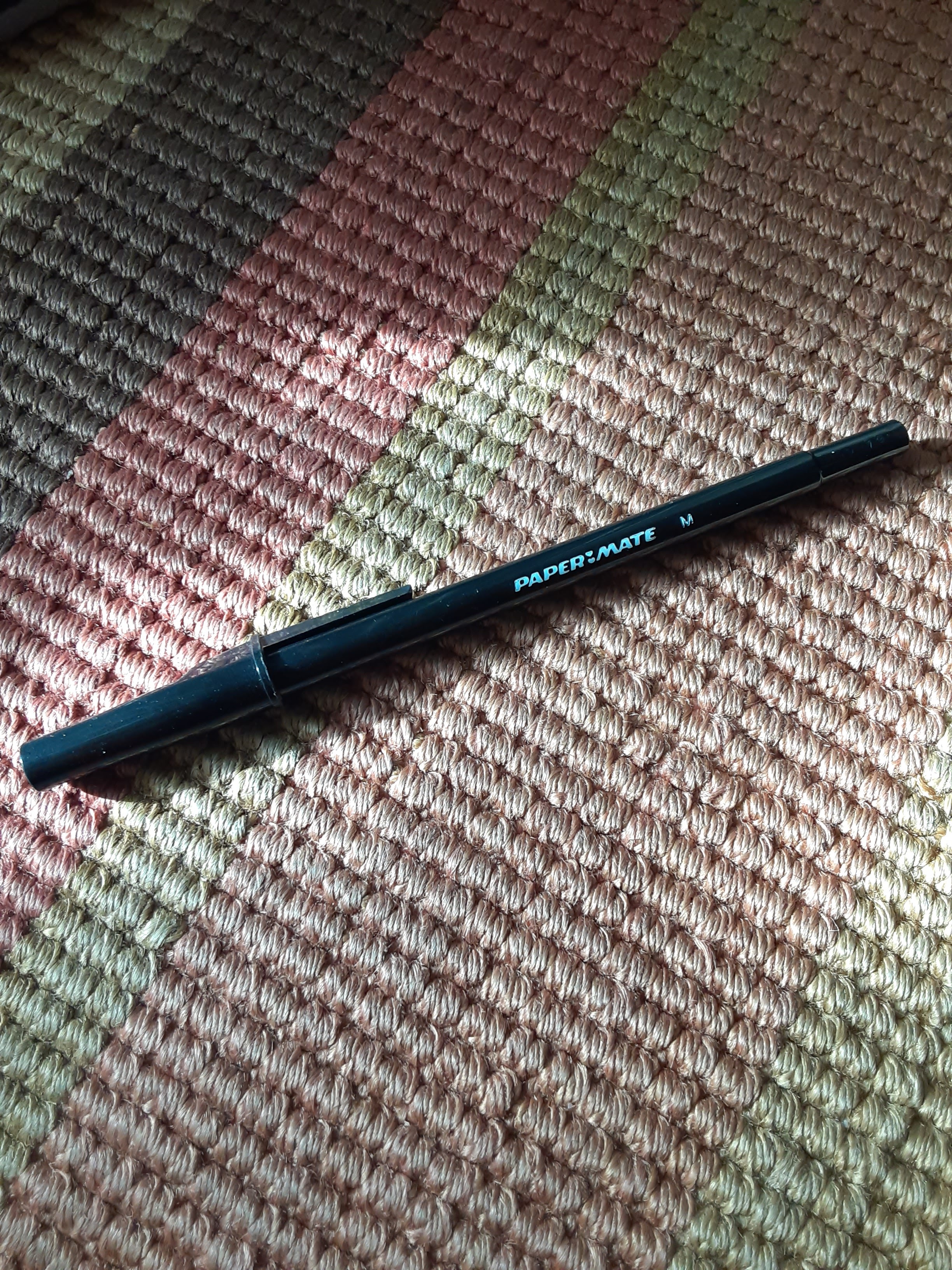
2-phenoxyethanol is the chemical name of a solvent that helps ink dry quickly, but also mimics an ingredient in termite "trail pheromone;" it helps them follow each other. 

It's used in both blue and black ink, and from either Bic or Papermate pens. Its primary use is in middle school science projects, to teach kids how pheromones work. You use this pen to write your name on a piece of paper, then drop some termites on there, and watch as your name is spelled in ants. 

Notes:
The Trail Pheromone of the Termite, Trinervitermes trinervoides. Tschinkel, Walter R.; Close, Peter G. (1972). J. Insect Physiol. Vol 19. pp. 707-721.

^This 1972 study says that "activity loss from filter paper is approximately exponential with a half-life of about 2 hr" in case you were wondering.

The Identification of 2-Phenoxyethanol in Ballpoint Inks Using Gas Chromatography/Mass Spectrometry – Relevance to Ink Dating. Laporte, Gerald & D Wilson, Jeffrey & Cantu, Antonio & Amanda Mancke, S & L Fortunato, Susan. (2004). Journal of Forensic Sciences. 49. 155-9. doi:10.1520/JFS2003217

^And why is this article published on the ASTM website? And with all the references listed as working for United States Secret Service, Forensic Division?  Because you can tell how old a document is by measuring the amount of this chemical that is left in the ink. 

Post Script:
Just pheromone things - "Seducin" - Some male cockroaches and crickets produce a pheromone called seducin from their bodies, on which the females nibble during copulation. This pheromone is an aphrodisiac. 


Wednesday, February 16, 2022

Social Deodorization


AKA Life Without Body Odor, Coming Soon

Life in the pits - Scientists identify the key enzyme behind body odor
Aug 2020, phys.org

We already knew the bacterium Staphylococcus hominis was the culprit, but these researchers have identified the specific enzyme (C-T lyase) in the bacteria that turns our odorless sweat into body odor, or what scientists call thiolalcohol. So now we can create a model of that enzyme, and figure out how to deactivate it. 

There's not enough science fiction out there looking at a society without body odor. Just kidding, this is already reality. And what happens is, the people who don't smell still use deodorant, because the people who do smell have just enough spending power to sustain a global corporate personal hygiene complex so powerful it can influence you to deodorize yourself even if you have no odor in the first place. 

If you're interested in this sort of thing, soft paywall to the New York Times about Unilever's attempts to sell deodorant in China, "a market with 2.6 billion armpits" (2018).

via University of York and Unilever: The molecular basis of thioalcohol production in human body odour, Scientific Reports (2020). DOI: 10.1038/s41598-020-68860-z

Post Script:
The smell of your breath is a subset of body odor. 
Research reveals details of how salivary glands collectively produce constellation of proteins found in saliva
Nov 2020, phys.org

What's in your saliva? Here you go. They don't tell you what it smells like, but with this info you'll be halfway there. Also, "oral biofluid" is science for saliva.

Also, in case you were wondering, "cysteine-rich secretory protein 3 (CRISP3) ... is expressed by human labial glands."

via University at Buffalo: Marie Saitou et al. Functional Specialization of Human Salivary Glands and Origins of Proteins Intrinsic to Human Saliva. Cell Reports Volume 33 Issue 7, 108402, Nov 17, 2020. DOI: 10.1016/j.celrep.2020.108402


Friday, August 20, 2021

On Handshakes and Animal Behavior

AKA Olfactory Sampling

Non-human primates Mark Zuckerberg and Pope Francis shaking hands and about to smell each other's chemosignals once they start covertly raising their hands near their face in about 20 seconds from now.

After you shake someone's hand, you smell your own hand. Sometimes the shaking hand, and sometimes the opposite, depending on the gender match. They call it "olfactory sampling," but we call it "smelling your fingers," and despite its being in poor taste while in public view, we do it almost neurotically, albeit covertly -- so covertly that even we don't notice ourselves doing it. 

I'm surprised this didn't resurface at the outset of the pandemic when we were all paying so much attention to how often we touch our face. In fact, the authors set us up thus:
Consistent with previous studies (Nicas and Best, 2008), we observed that humans often bring their hands to their noses. Of 153 subjects, 85 (55.55%) touched their nose with their hand at least once during baseline before the greet. Idle subjects had a hand (either right or left) at the vicinity of their nose for 22.14% of the time. (that's a lot of time!)
But this isn't just about how you can't keep your own hands off yourself:
Whereas facial self-touching has been considered a form of displacement stress response (Troisi, 2002), akin to rodent grooming, the novel framework we propose here for this behavior is that of olfactory sampling.
In this really carefully controlled study, they videotaped  hundreds of people after shaking hands with a greeter at the lab, and even outfitted the subjects tubes near their nose to monitor their sniffing behavior. The results were "unequivocal," and remind us that we are in fact animals, sniffing up a storm:
We found that humans often sniff their own hands*, and selectively increase this behavior after handshake. After handshakes within gender, subjects increased sniffing of their own right shaking hand by more than 100%. In contrast, after handshakes across gender, subjects increased sniffing of their own left non-shaking hand by more than 100%. Tainting participants with unnoticed odors significantly altered the effects, thus verifying their olfactory nature. Thus, handshaking may functionally serve active yet subliminal social chemosignaling, which likely plays a large role in ongoing human behavior.

*For example, by touching their nose when they were in the room on their own; ... Criterion for scoring was any application of a hand to the face, as long as touching was under the eyebrows and above the chin; n=271 down to 153.
And later on in the report, things get even more complicated:
The body odor of some of the experimenters was tainted by perfumes or gender-specific odors. Volunteers who shook hands with these tainted individuals behaved differently; when the experimenter was tainted with perfume the volunteers spent more time sniffing their own hands, but when the experimenter was tainted with a gender-specific odor they spent less time sniffing of their own hands. This shows that different smells influenced the hand sniffing behavior of the volunteers.
Now that you know, you might notice yourself doing it constantly. What would be really interesting now would be to somehow get some anosmics up in the mix, maybe congenitally, maybe some recent long covid anosmics, and see how these numbers change?

Notes:
Frumin I, et al. [incl Noam Sobel] A social chemosignaling function for human handshaking. eLife. 2015 Mar 03;4. https://www.ncbi.nlm.nih.gov/pmc/articles/PMC4345842/

Tuesday, August 10, 2021

Headline Party

My first master's degree was in architecture, and I graduated the day the United States housing market collapsed. So my second master's was in public health, and I got my first job the day Planet Earth went into pandemic lockdown. Expertise in indoor air quality and occupant exposure during an airborne pandemic will make your life pretty busy. Hence, a list of smell-related headlines I've been collecting in the meantime:

Unparalleled inventory of the human gut ecosystem
Jul 2020, phys.org
The Unified Human Gastrointestinal Genome (UHGG) collection, comprising 204,938 nonredundant genomes from 4,644 gut prokaryotes. These genomes encode >170 million protein sequences, which we collated in the Unified Human Gastrointestinal Protein (UHGP) catalog. 

via the European Bioinformatics Institute: Alexandre Almeida et al. A unified catalog of 204,938 reference genomes from the human gut microbiome, Nature Biotechnology (2020). DOI: 10.1038/s41587-020-0603-3
Fresh sea spray turns 'sour' after being airborne
Jan 2021, phys.org
"The smallest particles become 100,000 times more acidic than the ocean within two minutes," said Angle, first author of the paper.

via University of California San Diego: Kyle J. Angle et al. Acidity across the interface from the ocean surface to sea spray aerosol, Proceedings of the National Academy of Sciences (2020). DOI: 10.1073/pnas.2018397118
Researchers create a highly sensitive biohybrid olfactory sensor
Jan 2021, phys.org
So we decided to combine existing biological sensors directly with artificial systems to create highly sensitive volatile organic compound (VOC) sensors. We call these biohybrid sensors."

Takeuchi and his team essentially grafted a set of olfactory receptors from an insect into a device that feeds certain odors to the receptors and also reads how the receptors respond to these odors. 

via the University of Tokyo: T. Yamada el al. Highly sensitive VOC detectors using insect olfactory receptors reconstituted into lipid bilayers. Science Advances (2021). DOI: 10.1126/sciadv.abd2013
Male butterflies mark their mates with repulsive smell during sex to 'turn off' other suitors
Jan 2021, phys.org

Butterfly genitals secrete an odor that covers female genitals, deterring other males from mating with them. Occimene - it's the anti-aphrodisiac (for moths).

via University of Cambridge: Darragh K, Orteu A, Black D, Byers KJRP, Szczerbowski D, Warren IA, et al. (2021) A novel terpene synthase controls differences in anti-aphrodisiac pheromone production between closely related Heliconius butterflies. PLoS Biol 19(1): e3001022. 


Cosmic mouthful - Tasters savor fine wine that orbited Earth
Mar 2021, phys.org
This comes via the Institute for Wine and Vine Research in Bordeaux, and of course the International Space Station.
Researchers develop new smell test for Parkinson's, Alzheimer's and COVID-19
May 2021, phys.org
A new smell test developed by Queen Mary University of London researchers has been found to be easy to use in patients with Parkinson's disease, and could also be helpful in diagnosing COVID-19 in the broader population.

via  Queen Mary, University of London: A. Said Ismail et al. A novel capsule-based smell test fabricated via coaxial dripping, Journal of The Royal Society Interface (2021). DOI: 10.1098/rsif.2021.0039
Scientists invent an artificial nose for continuous bacterial monitoring
Jun 2021, phys.org
via Americans for Ben-Gurion University: Nitzan Shauloff et al, Sniffing Bacteria with a Carbon-Dot Artificial Nose, Nano-Micro Letters (2021). DOI: 10.1007/s40820-021-00610-w

Thursday, October 8, 2020

Full Cat Moon Revisited


It's that time of year again where the smell of feral cats marking their territory scents your local neighborhood. Only it's not actually the cats, it's the plants themselves. English boxwood to be specific. At the right time of year (which is now in New Jersey), these popular shrubs are announcing their presence via the sharp smell of a well-used litter box.

The offending molecule, called “cat ketone,” is also a main component in blackcurrant. Pour yourself a dram of blackcurrant desert wine, take a sip, and then smell the inside of the glass. And there you'll have it. Now take a walk around the block (anywhere from August to October), and pay attention. Once you tune in, you'll notice it every time you pass one of these bushes.

Sometimes we actually like bad smells. Rather, we learn to like them. Maybe it has something to do with our ability to control the biosphere so expertly. We have refined the practice of fermentation such that it has become an integral part of our diets. Bread, beer, cheese, kimchi, sauerkraut, chocolate; all these things are fermented. Fermentation is controlled rotting, and it's unnatural. (It's described way better in this book about fermentation that won the James Beard Award in 2013 for Reference and Scholarship.)

Uncontrolled rotting makes bad smells. Controlled rotting still makes bad smells, but less. And we learn how to ... re-evaluate those bad smells in light of their finer attributes. "Parmesan cheese" (isovaleric acid) comes up a lot in regards to this. If you put isovaleric acid in a hundred small bottles and give them to a hundred people, half will call it gross and the other half will love it. I call it quantum hedonics, but you can just call it an acquired taste.


Here’s  a picture of a boxwood shrub:


The Chukchi and Yupik of the Beiring Straits eat fermented fish, reindeer blood, and walrus fat and have even been said to have a preference for partially decomposed food.* This is reflected in vocabulary too: for example, Chukchi veglyt’ul ‘old edible’ versus pegyt’ul ‘old, should not to be eaten’; ... .
*Yamin-Pasternak, S., Kliskey, A., Alessa, L., Pasternak, I., Schweitzer, P. (2014) The rotten renaissance in the Bering Strait: Loving, loathing, and washing the smell of foods with a (re)acquired taste. Current Anthropology 55: 619–646.

In the Soviet era, some indigenous people were no longer exposed to these foods and odors; thereafter when the Soviet Union collapsed, younger people who had to go back to the fermented foods (or starve) had difficulties ingesting these potent odors. This goes to illustrate the importance of early experienced environmental odors.*
*Beauchamp, G. K. (2014) Foul odors of rotted food: Lessons from olfactory physiology. Current Anthropology 55: 634–635.

That all being said, it's not a bad thing that your blackcurrant apertif smells like civet; it's enriching your experience, and that's a good thing, right? Or would you rather not know?

“cat ketone”
4-thio-4-methylpentan-2-one

And here's a similar molecule that you can get as part of the AROXA Beer Taint Kit:

“buchu mercaptan”
p-mentha-8-thiol-3-one
Catty, like blackcurrant juice or tom cat urine, tomato plant

Notice below how this substance is described on the Good Scents Company directory for blackcurrant. They are used by the flavor and fragrance industry, so they are less likely to use the words "cat piss." "Catty" will suffice!

black currant bud absolute
powerful
impactful
green
incense
spicy
woody
herbal
berry
fruity
blackcurrant
blackberry
jammy
currant bud
catty
narcissus
boxtree
sulfur
sulfered family
unusual fruity aroma

Notes
The Art of Fermentation: An in-Depth Exploration of Essential Concepts and Processes from Around the World
by Sandor Ellix Katz

Winner of the 2013 James Beard Foundation Book Award for Reference and Scholarship, and a New York Times bestseller, The Art of Fermentation is the most comprehensive guide to do-it-yourself home fermentation ever published. Sandor Katz presents the concepts and processes behind fermentation in ways that are simple enough to guide a reader through their first experience making sauerkraut...

Post Script
Civet is a kind of animal musk taken from a kind of cat/mongoose. It’s used in perfumes because humans like the way it smells. Maybe it reminds us of the “quantum hedonic” natural body odors that we wash off every day. Civetone is the name given to the molecule that most represents the Civet smell.

Post Post Script
National Geographic attracting jaguars using Calvin Klein’s Obsession for Men 1986.


Tuesday, January 30, 2018

Olfactophilia


olfactophilia: sexual arousal by smells and odors emanating from the body

Is this in the DSMV??
(that’s DSM not BDSM btw)


Tuesday, August 2, 2016

Bed Bug Signal


The shed skin of bed bugs time-releases smell compounds that signal to other bed bugs where a good spot to bed down is located. They call it pheromones, but to me, that just makes the whole thing sound even funnier.

July 2016, phys.org

Friday, July 29, 2016

Why Do I Smell Cat Piss

AKA The Full Cat Piss Moon

I know this might sound crazy, but cat butts is a thing.

I wrote Hidden Scents because I have this thing where I smell what others can’t. This is not to say that my nose is any better than anyone else’s, only that I must pay attention more.

For example, I've been catching cat piss like crazy lately. Maybe you will too, now that I'm mentioning it.

The other day I'm at my friend’s house. “Come out back, check out my new weathervane.” I go outside, and BOOM, it hits me in the face. At first I thought they bombed their yard with mosquito repellent. Nah, that's definitely cat piss. You see, in a situation like this, I have learned not to say anything. Chances are they won't smell it, and I'll seem insulting. I wait a minute, just to make sure. After all, she is female, and I do smell “cat piss” on women sometimes (and once in awhile on men too) but I won't get into that...except to suggest that since civetone is such a big molecule, and lasts so long as a fragrance ingredient, that I might just be getting very old whiffs of that.

Anyway, finally I'm sure it's cat piss, so I go for it, “You have stray cats around here?”

“Yeah, why?“ “You don’t smell it?” No. They never do.

Yesterday it happened again. We are outside looking through the telescope – a crescent moon and Saturn – a beautiful night. And there it is. Listen – I actually don't mind the smell – it's fragrant! It's no coincidence that civet (which smells a lot like cat piss because it basically is cat piss) has been a primary ingredient in perfume for centuries.

Back to the backyard. The friends I’m with now are both male, so I don't hesitate, “You got stray cats up in here?”

“All over…You smell it don't you??” He knows; he's the guy who helped me name my book so he's familiar with my nose-thing. I sniffed-out the mold in his house a few years ago. “It’s mating season, I hear ‘em at night going crazy.”

Later that night, and out of nowhere, he says, “Yeah, it's like a perfume, I can smell it now.” Finally. I'm not alone.

I urge anyone who knows more about this than I do to leave a comment, and I'll continue a bit about civet.

And is it really cat mating season?

*Let's get this out of the way real quick: there is an ingredient in perfume called blackcurrant bud that smells like cat piss, and it does grow around here, and it fruits in midsummer. My friends, however, do not have any blackcurrant bushes on their property. Thanks Perfume Shrine for this.

POST SCRIPT
Civet is a kind of animal musk. In this case, it is a fragrant substance taken from a certain kind of wild cat by the same name, and usually specified as the African Civet. For centuries, these cats (it’s technically more like a mongoose) were hunted and trapped for their potent, musky pheromones, which are repeatedly scraped from their anal glands while in captivity. At smaller dilutions it becomes very pleasant – just like grapefruit oil, which at the right concentration can make you vomit uncontrollably. Civetone is the name given to the molecule that most represents the Civet smell, and it is very similar to Musk/Muscone, and has in it traces of Skatole (faeces). I’m not certain of this, but I think any synthetic alternative to getting Civetone is kept a secret. You can buy it, but you can’t make it yourself (without hella experimentin’ chemists).

POST POST SCRIPT
In order to attract jaguars, National Geographic-type people are known to use Calvin Klein’s Obsession for Men 1986.