Showing posts with label memory. Show all posts

Tuesday, June 28, 2022

Navigating the Information Gradient


Olfaction is so primitive in its function, that it's an ideal model for all kinds of things,  including navigation, but even moreso, information processing. The olfactory system might be the most effective information processing system we know of, and it's something we've barely begun to investigate. 

Chemotaxis doesn't make headlines often, but it should, because it's ultimately an information-processing problem (and the last time I checked, we were living in the Information Age).

Image credit: A smellmap of Amsterdam by Kate McLean circa 2017 at sensorymaps.com


Information processing constrains how E. coli bacteria navigate chemical gradients
Jan 2022, phys.org

Information that E. coli bacteria gather from their environment limits their performance at chemotaxis, the process by which they guide their movements in response to chemical signals.

And it's funny that they decided to use chemotaxis to test this, about using information efficiently, so in other words, chemosensation is a good model for testing and understanding how information is processed, biomimetically, if you will.

And why do we care? Because chemotaxis and olfaction are the same, at a primitive level. Not much has changed between the way E. coli navigates its environment and the way we do it.

"We wanted to test a broad biological hypothesis: that organisms make the best use of the information they acquire to perform behaviors and other functions. To investigate this, we needed a behavior simple enough that we could quantify how much information it needed and chemotaxis by the bacterium E. coli is a perfect example of such a behavior."

We realized we could measure the amount of information a bacterium was able to gather (in bits per second), while also understanding how much information they would need to navigate at the speeds observed."

To achieve this, they first set out to calculate the theoretical performance limit, which is the maximum speed at which a bacterium could navigate up a chemical gradient, based on a fixed rate at which it acquires information about chemical signals.

Finding the response strategy that maximized gradient-climbing speed with a fixed information cost resulted in the performance limit.

"We found that while climbing shallow gradients E. coli get very little information from their environment, about 0.01 bits/s.

via Yale: H. H. Mattingly et al, Escherichia coli chemotaxis is information limited, Nature Physics (2021). DOI: 10.1038/s41567-021-01380-3


Understanding how bacteria seek out and move towards food
Feb 2022, phys.org

Chemotaxis is the process of attraction in the direction of a chemical gradient. The primary way that organisms control their motion and progressively move toward a target is by inhibiting tumbling when sensing that the chemical concentration is increasing along their current direction.

The research team used stochastic optimal control theory (instead of linear control theory) to find the best possible fully nonlinear sensing and control strategy of run-and-tumble motion (of E. coli) in environments with noisy chemical gradients.

And it looks like chemotaxis, which is the progenitor of olfaction. It is not a stretch to say that olfaction is a form of chemotaxis, and we move through a room to locate a source by using the pattern of its vaporized chemical essence in the air in the room. We calculate its distribution pattern (by stochastic optimal control theory, apparently^), predict the source, and move towards it, updating as we go. The only difference here is that we use legs, and a pretty complex limbic system, whereas E. coli just tumbles and tumbles in the chemovoid. 

via University of Tokyo Institute of Industrial Science: Kento Nakamura et al, Optimal sensing and control of run-and-tumble chemotaxis, Physical Review Research (2022). DOI: 10.1103/PhysRevResearch.4.013120

Odour-Spatial Map - Diogo Matias - Champalimaud Foundation - 2021 [link]


Neurons in the olfactory cortex link smells to places
Feb 2022, phys.org

Sometimes it's good to have someone else say things like this, for a change: 

The researchers focused on the primary olfactory cortex. "The olfactory system is unique among the senses," said the study's senior author, Zachary Mainen, a principal investigator at the Champalimaud Centre for the Unknown in Portugal. "Only olfaction has direct reciprocal connections to the hippocampal system, which is involved in memory and navigation."

It looks like neurons in the posterior piriform cortex (part of the primary olfactory cortex) are encoding place information just like hippocampal cells, and especially behaviourally significant spots. So it's real -- smells are not just smells, they are places and smells at the same time; we can't extricate them from each other, at least not for some brain cells.  

via Champalimaud Centre for the Unknown: Cindy Poo, Spatial maps in piriform cortex during olfactory navigation, Nature (2021). DOI: 10.1038/s41586-021-04242-3

Post Script:
How the brain navigates cities: We seem to be wired to calculate not the shortest path but the 'pointiest' one
Oct 2021, phys.org

When people navigate through a city, they use not shortest path, but instead, pedestrians appear to choose paths that seem to point most directly toward their destination, even if those routes end up being longer, and this is called vector-based navigation.

via  Massachusetts Institute of Technology: Paolo Santi, Vector-based pedestrian navigation in cities, Nature Computational Science (2021). DOI: 10.1038/s43588-021-00130-y


Thursday, April 7, 2022

Smells Like News


Too many headlines, too little time.
Image credit: Smell Test, Win McNamee Getty Images, 2010


Smelling Disease
Monell Updates, Feb 2022

Led by Monell chemical ecologist Bruce A. Kimball, PhD, the research team is taking the innovative approach of classifying fever-inducing diseases based on their distinctive signatures of volatile compounds in urine and saliva.

via the Monell Chemical Senses Center: Millet P., Martin, T., Opiekun, M., Beauchamp, G.K., and Kimball, B.A. (2021). Differing Alterations of Odor Volatiles among Pathogenic Stimuli. Chem. Senses. 46: bjab030.


'E-nose' could someday diagnose Parkinson's disease by 'smelling' skin
Feb 2022, phys.org
Three odor compounds (octanal, hexyl acetate and perillic aldehyde) were significantly different between the two groups, which they used to build a model for PD diagnosis.

Next, the researchers analyzed sebum from an additional 12 PD patients and 12 healthy controls, finding that the model had an accuracy of 70.8% in predicting PD. The model was 91.7% sensitive in identifying true PD patients, but its specificity was only 50%, indicating a high rate of false positives.

Sorry to say but those might not be false positives...we've seen this before (they haven't been diagnosed yet).

via Department of Biomedical Engineering, Zhejiang University, Hangzhou: Wei Fu et al, Artificial Intelligent Olfactory System for the Diagnosis of Parkinson's Disease, ACS Omega (2022). DOI: 10.1021/acsomega.1c05060


Study identifies brain areas that support social semantic accumulation
Feb 2021, phys.org

Olfaction is a social sense, and more reasons why we're bad at naming smells, because as somewhat social words, we think of them in sentences not in words...

via CAS Key Laboratory of Behavioral Science in China and University of Trento in Italy: The brain network in support of social semantic accumulation. Social Cognitive and Affective Neuroscience(2021). DOI: 10.1093/scan/nsab003.


Odd smell: Flies sniff ammonia in a way new to science
Jun 2021, phys.org

They probed all three types of scent neurons in the flies' sensilla, but they didn't respond to ammonia. But the fly was obviously smelling it, based on its behavior. So the researchers realized there had to be a fourth scent neuron they hadn't known was there. And they found it—but it didn't seem to have the usual odor receptors on it. It was covered in ammonia transporter (Amt), a molecule that is known to allow ammonia in and out of cells.

No one had ever known a transporter molecule to also act as an odor receptor. But there it was. When they selectively killed off only that type of neuron, the flies did not respond to ammonia at all. And when the team forced scent neurons that don't normally respond to ammonia to express Amt on their surfaces, those neurons began responding to ammonia, too.

via University of Connecticut: Alina Vulpe et al, An ammonium transporter is a non-canonical olfactory receptor for ammonia, Current Biology (2021). DOI: 10.1016/j.cub.2021.05.025


Scientists on the scent of flavor enhancement
Jul 2021, phys.org

On smelling -- The less they knew about the reference aroma, the higher their chances of correctly identifying a match—a finding that suggests aroma detection involves learning, memory and cognitive strategy.

via The Ohio State University: Mackenzie E. Hannum et al, Non-food odors and the duality of smell: Impact of odorant delivery pathway and labeling convention on olfactory perception, Physiology & Behavior (2021). DOI: 10.1016/j.physbeh.2021.113480

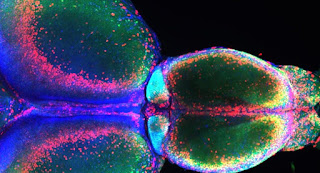
Image credit: Zebrafish Brains - Stephanie Fore - 2021


Smells and emotions tug on the brain's habenula, or 'little rein'
Aug 2021, phys.org

Situational awareness:
Kavli Institute researchers showed that the habenula relays information from the outside world, such as smell and sight, along with internal states associated with emotions and learning, to the brain regions that control adaptive behaviors.

"It turns out that the habenula is an information hub," said Emre Yaksi, a professor at NTNU's Kavli Institute for Systems Neuroscience and head of the research group that did the study. "It integrates information about odors from the environment with the information from the limbic system, which is involved in emotional behaviors and learning."

"We argue that the habenula helps the brain to stop certain actions and communications across brain regions, in order to shift it to another mode that is better suited to the situation that the scent warns of," he said. 

via Norwegian University of Science and Technology: Ewelina Magdalena Bartoszek et al, Ongoing habenular activity is driven by forebrain networks and modulated by olfactory stimuli, Current Biology (2021). DOI: 10.1016/j.cub.2021.08.021


Your sense of smell may be the key to a balanced diet
Aug 2021, phys.org

Long story short -- if you just ate a cinnamon bun, you're less likely to want a cinnamon bun, because something about your olfactory acclimation, adaptation, attenuation... 

via Northwestern University: Laura K. Shanahan et al, Olfactory perceptual decision-making is biased by motivational state, PLOS Biology (2021). DOI: 10.1371/journal.pbio.3001374


New research 'sniffs out' how associative memories are formed
Sep 2021, phys.org

Neuroscientists at the University of California, Irvine have discovered specific types of neurons within the memory center of the brain that are responsible for acquiring new associative memories. Additionally, they have discovered how these associative memory neurons are controlled. 

Specific cells in the lateral entorhinal cortex of the medial temporal lobe, called fan cells, are required for the acquisition of new associative memories and these cells are controlled by dopamine, a brain chemical known to be involved in our experience of pleasure or reward.

In the study, researchers used electrophysiological recordings and optogenetics to record and control activity from fan cells in mice as they learn to associate specific odors with rewards. This approach led researchers to discover that fan cells compute and represent the association of the two new unrelated items (odor and reward). Without these cells, pre-learned associations can be retrieved, but the new associations cannot be acquired. Additionally acquiring new associations also requires dopamine.

"We never expected that dopamine is involved in the memory circuit. However, when the evidence accumulated, it gradually became clear that dopamine is involved," said Igarashi. "These experiments were like a detective story for us, and we are excited about the results."

via University of California, Irvine: Lee, J.Y. et al. Dopamine facilitates associative memory encoding in the entorhinal cortex. Nature (2021). doi.org/10.1038/s41586-021-03948-8


A universal law of physiology emerges from a professor's research
Oct 2021, phys.org

"Imagine you walk into a room someone has just painted. You'll likely think, 'This smells bad.' But the sensation decreases as you stay in there. The molecules don't disappear, not within that time frame. You've just gotten used to it."
-University of Toronto Engineering professor Willy Wong 

From an initial state, the organism's response activity rises to a peak response, then falls to a new final steady state. Wong has discovered that those three fixed points on the adaptation curve form a mathematical relationship that is obeyed across all sensory modalities and organisms.

"I compared 250 measurements of adaptation from different branches of sensory physiology and found that they are all compatible with a single, simple equation," says Wong.

via University of Toronto: Willy Wong, Consilience in the Peripheral Sensory Adaptation Response, Frontiers in Human Neuroscience (2021). DOI: 10.3389/fnhum.2021.727551


Scent of newborn infants blocks aggression in men, stimulates aggression in women
Nov 2021, phys.org

Dr. Eva Mishor from Prof. Noam Sobel's research group at Weizmann's Brain Sciences Department and the Azrieli Institute for Human Brain Imaging and Research have found that a molecule that can likely be sensed by all mammals, and that is found in abundance on the scalps of newborns, sparks brain and behavioral changes in adults who are exposed to it, affecting women one way, and having the opposite effect on men.

The finding is among the first to provide a direct link between human behavior and a single molecule picked up through the sense of smell. Furthermore, the diametrically opposed change it effected in women and men sheds new and surprising light on the mediating role sex plays in olfactory perception and its resulting neurological processes.

They're talking about pheromones, which as far as we know, do not work in humans. Apparently that has changed now?

The odor is hexadecanal, or HEX, and although you can't smell it, if you sniff it, it will affect your behavior. We already know it affects mice, but humans not so much. Not until now that is. We also know, through less-scientific means, that the only universally-liked smell for all people everywhere is the baby's head. 

via Weizmann Institute of Science: Eva Mishor et al, Sniffing the human body volatile hexadecanal blocks aggression in men but triggers aggression in women, Science Advances (2021). DOI: 10.1126/sciadv.abg1530

Thursday, October 7, 2021

On Olfactory Navigation


I purposely read this book Supernavigators (2019) hoping to get some snippets on using our sense of smell to find things, and I wasn't disappointed. 

Humans were led to a random location within a room diffused with two odors. After brief sampling and spatial disorientation, they had to return to this location. Humans located the target with higher accuracy in the olfaction-only condition than in the control condition and showed higher accuracy than chance. 
-Jacobs, L.F.; Arter, J.; Cook, A.; and Sulloway, FJ. (2015). "Olfactory orientation and navigation in humans," PLOS 'One, 10(6), e0129387. https://www.ncbi.nlm.nih.gov/pmc/articles/PMC4470656/

Note there are two different versions of olfactory navigation -- one where you track an odor to its source (this relies heavily on bilateral input, aka stereo-olfaction) and the other, much more common for modern-day humans, is when you identify a place by its odor. We usually have our eyes open, and being the ocularcentric creatures that we are, we are likely to use visual cues and not even realize the odor-identity of a place. 

But it doesn't stop here, the rabbit hole continues, and this one goes all the way back to the golden days of behavioral science, when rats told us everything we wanted to know about ourselves: 
This report is ultimately based on rat experiments, with the "men" part being only conjecture by the researcher; and he concedes, "My argument will be brief, cavalier, and dogmatic. For I am not myself a clinician or a social psychologist. What I am going to say must be considered, therefore, simply as in the nature of a rat psychologist's ratiocinations offered free.
*Ratiocinations are another word for thoughts that also happens to remind the reader that we're talking about rats (he italicized the rat in ratiocinations).

The "mapmaking" happens during what they call "Vicarious Trial and Error" or "VTE'" and described as "the hesitating, looking-back-and-forth, sort of behavior which rats can often be observed to indulge in at a choice-point before actually going one way or the other." If you're not a scientist, you can probably just call it "thinking."

via Berkeley Labs: Tolman, E.C. (1948). "Cognitive maps in rats and men," Psychological Review, 55(4), p.189.
And with that, let us not forget that olfaction is the first sense. Before all the other ways we sense our environment, bacteria and fungi were using chemotaxis, detecting and navigating their way through a world of chemical gradients. The essay at the end of Hidden Scents, called "Olfactory Space and n-Dimensionality" tells the story of the primordial eukaryote as it chemo-taxis its way through evolution, past the multi-cellular organism, the chordata (animals with vertebrate), and eventually to the big-brained, smooth-skinned monkeys that we are today.

The neocortex is an outgrowth of the nose-brain, and not the other way around, and therefore olfaction can be a useful model for understanding the n-dimensional information network in which our brains operate. The world is typically understood as a 3-dimensional space, but in fact, from the perspective of the brain, we are navigating and interacting with an infinitely-dimensional information space. 


Wednesday, August 15, 2018

The Smell Memory Kit


Sissel Tolaas is a maniac. And if you don't know who she is, you should, because she's pushing the olfactory world to the brink of utopia.

Smell researcher extraordinaire, she does a lot of crazy things related to smells. She also has a knack for understanding and exploring the autobiographical aspects of smell.

In this project, the Smell Memory Kit, she hacks through the jungle of our olfactory system to deliver an idea, and a product, that is actually really useful.

This Kit uses "abstract smells" created in her lab - this simply means they are a smell (or combination of smell-molecules composed in a single gestalt smell) you've most likely never smelled before. And if you're having a special experience, and you want to remember it forever, you break open the abstract smell amulet, take a whiff, and bam - totally immersive physiodatamap.

This is very clever, because every smell you have ever smelled is already a part of your autobiographical memory, which is the part of your memory that encodes everything you've ever done and how it felt and who you were with etc. Smell memories are the most powerful kinds of memories. Because smell is the only sense to enter our brain backwards (it gets processed by the 'feeling' parts of us first, and then by the thinking parts) it records with it all of the physiological data in your body at that moment along with it. This is why smells can evoke such powerful memories.

And if you smell something for the first time (Toolas' Abstract Smells) then the thing you're experiencing at the moment will be linked with that smell. So it's a clever way to re-live that experience in its entirety.

Anyway, she does a better job of explaining it:

The Smell Memory Kit is a revolutionary tool to capture the most important moments of your life. 
THE STARTER PACK contains one abstract smell portioned into 3 AMPULES and a handmade metal AMULET to carry your smell ampule wherever you go. 
Abstract smells are smells that have NOT YET been connected with any memories so far 
Whenever you want to eternally record and memorize a moment, you just break open the SMELL KIT AMPULE, release the abstract smell molecules and take a deep breath. 
From now on this smell will bring back the memory and the emotion of this very moment each and every time you open your SMELL MEMORY AMULET.

image source: http://smellmemorykit.supersense.com/#menu

Thursday, June 28, 2018

Memory Transplant You Say


Just when you thought old-age had you beat. Now you can remember where you put your keys forever. Turns out we have memory in our RNA and we can transplant that RNA somewhere else if we want. Like in your home-brain memory storage device of the 22nd century. Every day you update your device with actual molecules from your own body. You know, just in case you lose them, you’ll have a backup.

Really, we’re looking at snails, and a learned physiological response coded into their RNA. They get shocked and then the defense system in their bodies remembers that, and they tense up longer than if they hadn’t been shocked, and then that memory is literally transplanted in another snail, via RNA, and that other snail will react in the same way with a longer defensive contraction response. So it’s like you give the snails PTSD and then pass it on to whoever you want.

Maybe you’ll be able to buy that at the market one day; suffering for sale. I hear echoes of Slavoj Zizeck explaining to us that choosing Tom’s sneakers because they are good for the planet is our way of feeling better about participating in a system that oppresses lots of people in the process. So if you’d like to feel better about being a jerk, you can just upload the memory of being harassed and see what it’s like, become empathetic and be less of a jerk.

The real news is that we are making some progress in knowing how memory, such an ephemeral thing, comes from our physical bodies.

May 2018, BBC News

Image source:


Wednesday, June 28, 2017

The Brain That Wouldn't Die

Film still from "The Brain That Wouldn't Die", Sterling Productions 

The flatworm can regenerate its entire brain in only a few days, and so scientists decapitate them, but the worms retain memory of a previous experiment, despite having lost their head, and how this works is unexplained, although it implies that information is stored somewhere else besides the head.

Smells are encoded into memory via the limbic system, and this means recording body-states along with the smells. Our body remembers the way it felt the last time that smell was received. We know that a phantom limb remains in the brain, despite its having been amputated, but does a memory remain in the body despite having lost its head? It should be interesting to note here that odor receptors are all over the body, in organs and even in muscle tissue.

-source:
phys.org, August 2013

"An automated training paradigm reveals long-term memory in planaria and its persistence through head regeneration" Journal of Experimental Biology jeb.087809 First posted online July 2, 2013, DOI: 10.1242/jeb.087809

Wednesday, June 14, 2017

The Persistence of Memory


There are many kinds of memory. Everyday memory is responsible for that ‘senior moment’. There’s body-memory, the reason your head jerks on sniffing straight tequila the morning after. And allergies in general. There’s the computer analog, source of perennial misnomer in its confusion between “storage” and “working memory”.

Then there’s cultural memory. As a group, in regards to politics at least, it seems like we have a bad memory, voting for people today who only last term were working against our interests. And what about the Dark Ages of Europe – collective memory dissolved into the ether.

Let’s take this Hurricane Patricia, “strongest Pacific Coast hurricane ever.” In this case, “ever” can be only one hundred years. Our contemporary meteorological memory isn’t much older than the ambergris floating up on our shores.

All this having been said, there is a group of Aboriginal folks in Australia who recollect the way their coastline looked 7,000 years ago, and as corroborated by geological records. This should come as somewhat of a surprise to the casual reader: “I can’t even remember where I put my keys;” how can a group of people relying solely on oral communication (and hence no means of information storage other than their own individual memories) remember such a thing? They don’t write things down, no libraries funded by nation-states, no institutions of knowledge. How does such a fickle system resist the onslaughts of entropy that time brings?

This kind of memory reveals the hidden power of collective thought, and the organized fortification of a group of people against that second law of thermodynamics.

With this in mind, that the cartographic memory of a coastline can remain intact for many thousands of years by oral transmission and wet-memory-storage alone, do we really find it so improbable that the cultural memory of pheromones can reinforce both our perception and our visceral reaction to an olfactant?

As an everyday person, virtually all of our knowledge about our olfactory environment is orally-communicated. It either by-passes or has never made it in the first place to textual transmutation. (It barely has a language, at that!)

We are no different today when it comes to Smell. The permanence and accessibility of the vast, content-addressable memory that is the Internet has nothing to do with the olfactory aspect of our cultural memory. In fact, because there are more words written about fragrances than everyday smells, and because the language used in the sales and reviews of those fragrances functions as poetry and not as consensually-recognized, objective descriptors (because it simply cannot be, by its nature) our Lingua Anosmia relies entirely on wet-memory-storage.

We do not smell molecules with names. We smell memories – autobiographical indices, physiological profiles, and spatiotemporal coordinates. These are not words, and that we still use them to generate information about our world puts us on par with our ancestral counterparts (and I might say worse-off in terms of indentifying discrete molecules by their odor.)

Perhaps I will be accused of picking the low hanging fruit here, but I would ask this – in light of a group of people who remember a geographical feature as it was 7,000 years ago, go ahead and ask someone today to describe the smell of Musk. Now compare it to one of times past. Today it is “clean”, and then it was “dirty”. What has our memory done? And how has our ‘advanced’ system of external memory storage (i.e. writing) helped?

Note – due to the ubiquity of synthetic musks in cleaning products, especially laundry detergents, a nose of Western-style influence would tend to describe musk as “clean”, whereas the origin of the eponymous aromatic substance itself is a secretion taken from the fecal-flaked, urine-cured underside of a wild animal.

Post-Script
taken from the following:

Professor Nunn said present sea levels in Australia were reached 7,000 years ago and as such any stories about the coastline stretching much further out to sea had to pre-date that time.

"These stories talk about a time when the sea started to come in and cover the land, and the changes this brought about to the way people lived – the changes in landscape, the ecosystem and the disruption this caused to their society," he said.

"It's important to note that it's not just one story that describes this process. There are many stories, all consistent in their narrative, across 21 diverse sites around Australia's coastline."


"Aboriginal Memories of Inundation of the Australian Coast Dating from More than 7000 Years Ago." Australian Geographer DOI: 10.1080/00049182.2015.1077539

Monday, May 29, 2017

Synopsis Extraordinaire


I have been immensely fortunate to have Mr. John Biebel review Hidden Scents on the Fragrantica website. Check it out here

Fragrantica is a unique site that hosts an encyclopedia of fragrance, in addition to being an international online magazine for perfume reviews and news in the world of fragrance.

John Biebel is an artist and writer and perfume aficionado. He has a visual arts background like myself, but more importantly, he has penetrated deeper into this book than anyone besides my editor, and has come back with a synopsis that is most articulate.

If you're thinking about reading the book, but you aren't sure what it's about or whether it's up your alley, read this review.

Not to mention, his writing on such a potentially confusing subject is so smooth it's practically machine-readable(!)


Wednesday, April 12, 2017

Embryos Can Smell Too

Comparing the embryonic development of various animals, Ernst Haeckel's Art Forms in Nature                   

Among the myriad ways olfaction is set apart from all other senses, this is perhaps the most important – Smell is the first sense to develop in ontogeny (the ‘lifetime’ of an organism), and begins in the womb.

We know babies can hear in the womb, but it isn’t often considered that they can smell too. Smell is a form of chemosensation. And if we think of an embryo as floating in a chemical soup, it makes sense that such an organism would be able to sense its surroundings. Possibly more surprising than this, it should be noted that adult humans have olfactory receptors in other parts of their bodes besides the nose. Certain organs are populated by the same nerve cells that relay the presence of aromatic molecules to our thinking brains via olfactory perception.

Here we must distinguish between sensation and perception. It is a misnomer to say that an embryo, or any such simple organism, can smell. Can you see with your eyes closed? Well, yes, but it depends on what you mean. The photoreceptors in your eyes still work whether your eyes are open or closed. In fact, they never stop working. The “seeing” part of you may stop, but the receptors are on all that time, ready to be stimulated by the most gentle of photon showers. (And when there is none – they make things up!) Babies in utero too can sense light levels in this way – but is that “seeing”? Not so much. And is it the same with smelling? Sort of. Perception requires a brain, but to sense does not. Plants can smell. Not really though; they can only sense chemicals.

Back through the mirror again, what does it mean for adult humans to smell, to perceive chemical signals? It is not a cognitive sense, or should we say a ‘cortical sense’. Smell is different in the way it uses a cortex, the perceptual-processor that creates an experience in our minds. For smell, the ‘processor’ is the limbic system itself, a beta-brain that runs inside, underneath, or within our more advanced human brains. This limbic system-chemical signal interaction is much more akin to the way a plant “sees” a sunset than a human. And so, to say that an embryo can smell, is less of a stretch than to say that it can see.

It makes matters more complex, however, when the chemical environment of the organism in utero actually affects its adult behavior. But because smell is a learned perception – an emergence of episodic memory – the osmic sensorium that we experience today and ultimately the way we respond to it, is predicated upon the very primitive origins of our ontological journey.

Post-Script
Study shows embryos can learn

Pond snails are able to sense chemicals released by their predators whilst they are still embryos in the egg and alter their behaviour accordingly, according to new research at Aberystwyth University and the University of Exeter and Plymouth University

When snails are exposed to predator smell during this very early developmental stage, they are better able to avoid predatory fish once they hatch...

The ability to respond to potential predators while still in the egg may be extremely important in allowing young vulnerable snails to survive.

Saturday, June 11, 2016

On Potent Memories vs Weak Memories


Lots of discoveries have been popping up on the subject of memory. UK scientists won the Brain Prize for showing how memories are stored in the brain, based on the “fire together, wire together” theory.

Some recent work on how we forget has come up that reminds us why our smell memories stay potent forever. The idea that we forget memories after repeatedly recalling similar memories has been around for a while, but for the first time, scientists show evidence of active repression.

In Hidden Scents: The Language of Smell in the Age of Approximation, the potency and tenacity of our smell memories are discussed as an analogy to the concept of lossy data in computer science. In the study linked above, memories that are repeatedly accessed have a negative lasting effect of on the fidelity of similar memories. In computer science, every time a .jpg is opened and re-saved, it loses some of its data due to compression. This is what lossy data compression is about.

For smell memories however, where the memory is instigated by a unique signature of aroma compounds (one that might represent your grandparents’ attic, for example), this process of retrieval and re-saving does not happen for perhaps forty years. And then one day: You know that feeling – it’s called the Proustian moment, after the most widely recognized description of olfactory memory in literary fiction – it’s when you walk into a room and you’re hit, halted in your tracks, and assaulted by your past, captured in a moment that consumes your awareness.

“Oh my….oh…that’s…that’s my grandparents’ attic – I haven’t thought about that in forty years.”

And you shiver, you time-traveler, re-living a most personal page in your autobiography. Again, the reason smells can do this to us is because these instigating signatures, these unique aroma profiles, are such a complex and nuanced combination of molecules that the chances of your encountering them on a regular basis can be very small. There is no opportunity to rewrite the data. It just sits there forever, waiting.

There’s more to the story of course, like the fact that these memories are a holistic conglomerate of spatiotemporal, physiological data about the precise state of your body at the moment of encoding, but that’s already too much for today.

Notes:

March 2016, BBC News
http://www.bbc.com/news/science-environment-31909935

Nature Neuroscience, May 2016

March 2016, BBC News


Wednesday, May 18, 2016

Brainless Intelligence


Many-headed slime mold aka Physarum polycephalum, image via the French National Centre for Scientific Research, 2016 

Some folks made slime think. The lowly slime mold, a single-celled protist, shows evidence of learning. It remembers the particular route that avoids irritants placed in its path by tinkering scientists. Yup. Funny thing is, the organism investigated is commonly called the “many-headed slime.” This turns out to be an ironic name, for this organism, without a central nervous system, acts like it does in fact have a head, or a brain, and maybe more than that – many heads, and many brains.

This isn’t the first time slime mold has done amazing feats. It’s used to recreate roadmaps from ancient cultures, or Tokyo’s rail system, just based on topographical information. Who do these single-celled organisms think they are, acting like they have brains? This raises the following question: Where does intelligence come from? Does it need a brain?

In Hidden Scents, while talking about the evolution of the smelling organism, I suggest that the mind is first, and then comes the body. There is something thinking in the most primitive of organisms, deciding which molecules in its surrounding sea of life, and proto-life, should be taken into it, to become part of it, and which molecules should stay outside. To be alive, one of the most basic requirements is to have a boundary between the living thing and the outside. This defines the body. But how does this body, living in a sea of potential bodyparts, determine which parts to keep, and which ones to leave behind. The body comes from somewhere, doesn’t it? And isn’t a body - a living body - more than just a bunch of molecules? If so, what’s organizing those molecules? Who is running the show?

Chemosensation is the basis of this interface, and is the process by which human olfaction works. The initial decision-making algorithms to run with this chemosensation are also the base-algorithms of human thought. Rational thought is a much more complex affair, but at the base is the limbic system, and in smelling we have a model for the kind of thinking performed by a simple, multicellular organism. Or even a collection of single celled organisms, perhaps?

Our current mode for thinking about intelligence is undergoing a major reboot. In light of developments in artificial intelligence, the boundaries of human intelligence are already blurred – many of the things once considered human, rational thought are now programmed into an "artificial life form," i.e., a computer program.

But that’s ok, because current models of the brain follow the schematics of a computer in the same way the nervous system was initially thought of as a closed network of fluids and the brain a pressure-modulator. This was in the age of hydraulics, before we knew what electricity was. Now we know what a computer is, and so the brain is like a computer. Tomorrow, we may know what life is; will we then compare the brain to it?

Our ideas on thinking and intelligence necessitate a brain (whether it’s a computer or a water pump or a lifeform). It's very counter intuitive to hear that things without brains can think. Who knows, next it will be like “Things without bodies can think.” Does the temperature in a room think? Does it have a memory?

Notes:
May 2016, phys.org

Laura Sanders, Wired, via Science, 2010

Mar 2015, phys.org