Friday, March 11, 2022

Somatic Semantics


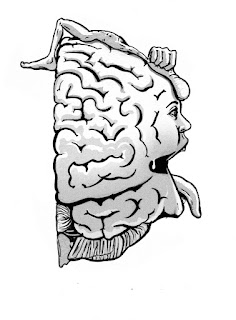
The above image was illustrated by Joe Scordo for Hidden Scents circa 2014, and based on the 1950's illustrations credited to Penfield and Rasmussen, which is need of an update, no?

Brain computer interface turns mental handwriting into text on screen
May 2021, phys.org

My rudimentary understanding of the brain says that the patterns coming from you head when you use any form of motor control would be much easier to see that patterns from simply visualizing letterforms. Something about the somatosensory cortex anatomical map.

For the first time, researchers have deciphered the brain activity associated with trying to write letters by hand. Working with a participant with paralysis who has sensors implanted in his brain, the team used an algorithm to identify letters as he attempted to write them. Then, the system displayed the text on a screen—in real time.

via Howard Hughes Medical Institute: High-performance brain-to-text communication via handwriting, Nature (2021). DOI: 10.1038/s41586-021-03506-2

Post Script:

'Rough' words feature a trill sound in languages around the globe
Jan 2022, phys.org

"They demonstrate a deep-rooted and widespread association between the sounds of speech and our sense of touch."" -Mark Dingemanse, Co-author and Associate Professor in Language and Communication at Radboud University

Also, kiki bouba.

via Radboud University, home of the Limbic Signal patron saint Asifa Majid: Bodo Winter et al, Trilled /r/ is associated with roughness, linking sound and touch across spoken languages, Scientific Reports (2022). DOI: 10.1038/s41598-021-04311-7

Why writing by hand makes kids smarter
Oct 2020, phys.org

"The use of pen and paper gives the brain more 'hooks' to hang your memories on. Writing by hand creates much more activity in the sensorimotor parts of the brain. A lot of senses are activated by pressing the pen on paper, seeing the letters you write and hearing the sound you make while writing. These sense experiences create contact between different parts of the brain and open the brain up for learning. We both learn better and remember better," says Van der Meer.

via Norwegian University of Science and Technology: Eva Ose Askvik et al. The Importance of Cursive Handwriting Over Typewriting for Learning in the Classroom: A High-Density EEG Study of 12-Year-Old Children and Young Adults, Frontiers in Psychology (2020). DOI: 10.3389/fpsyg.2020.01810

Pan-Anosmia


Mechanism behind loss of smell with COVID-19 revealed
Feb 2022, phys.org

  • For more than 12 percent of COVID-19 patients, olfactory dysfunction persists 
  • SARS-CoV-2, indirectly dials down the action of olfactory receptors
  • The new study may also shed light on the effects of COVID-19 on other types of brain cells, and on other lingering neurological effects of COVID-19 like "brain fog," headaches, and depression
  • Presence of the virus near nerve cells in olfactory tissue brought an inrushing of immune cells, microglia, T cells, and cytokines that changed the genetic activity of olfactory nerve cells
  • They used infected golden hamsters and olfactory tissue from 23 human autopsies [hamsters are more susceptible to nasal cavity infections]

Reminder of why it's such a big deal when you start messing with smell:
"Other work posted by these authors suggests that olfactory neurons are wired into sensitive brain regions, and that ongoing immune cell reactions in the nasal cavity could influence emotions, and the ability to think clearly (cognition), consistent with long COVID."

The talk on gene behavior and downregulation of receptor building is lost on me (not a geneticist, not a neurologist), but one of the main points I am reminded of when reading this is -- for those who experienced a change in taste or smell, for any reason, but especially after a COVID infection, long-term brain damage is possibly ongoing, but it's the kind to go undetected for another 20-30 years, depending on how old you are, of course. 

They also seem to suggest that this is an explanation for why people experience brain fog, and even emotional disturbance, all of which makes a lot of sense, because your sense of smell is connected to the all those brain areas -- the hippocampus for memory and the amygdala for emotion, both integral parts of the limbic system. 

via NYU Langone Health Department of Microbiology, NYU Grossman School of Medicine and Columbia University: Marianna Zazhytska et al, Non-cell autonomous disruption of nuclear architecture as a potential cause of COVID-19 induced anosmia, Cell (2022). DOI: 10.1016/j.cell.2022.01.024


WHERE CAN I GET MORE INFORMATION ON SMELL LOSS?

Monell Anosmia Project - US Organization studying smell and taste

AbScent - UK Organization raising public awareness of smell loss

National Institute on Deafness and Other Communicable Disorders (NIDC) - Smell Disorders

ENT UK - Loss of Smell as Marker of Covid-19 Infection


Post Script:


Thursday, March 3, 2022

Organoids of the Nasal Persuasion


Model of the human nose reveals first steps of SARS-CoV-2 and RSV infection
Feb 2022, phys.org

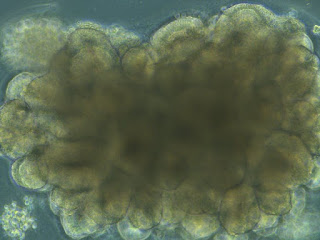
I used to think it was a big deal that we knew how to grow diamonds in a laboratory. But then we started to grow organs. Intestines, kidneys, lungs,  brains (pictured above) and now noses.

They made a nose from scratch, using nose epithelial cells swabbed from somebody's nose, and placed on a substrate designed to enable them to interact as they normally would with the environment. (For this study, they were adding to that environment SARS-CoV-2 and RSV virions.) We could then call this an artificial nose, although that might be misleading. It's not full-blown olfaction, but it's a step. 

via Baylor College of Medicine: Anubama Rajan et al, The Human Nose Organoid Respiratory Virus Model: an Ex Vivo Human Challenge Model To Study Respiratory Syncytial Virus (RSV) and Severe Acute Respiratory Syndrome Coronavirus 2 (SARS-CoV-2) Pathogenesis and Evaluate Therapeutics, mBio (2022). DOI: 10.1128/mbio.03511-21

Image credit: This is a human brain organoid, from the National Institutes of Health, circa 2021.

Wednesday, February 16, 2022

Deep Nose


Artificial networks learn to smell like the brain
Oct 2021, phys.org

We now have an artificial neural network that works like the nose. It's not an electronic nose; that's not the big deal part. 

What's important here is that, first of all, this is from the lab that brought us olfactory receptors. Next, these scientists didn't even model the network on evolution. They made an algorithm to solve an odor categorization task, and let the network run with it. Some might call that artificial evolution, but scientists will call it machine learning. After several iterations, the network found an optimized structure for solving this task -- the network ended up looking just like our olfactory system. Go figure.

The "brains" of a neural network lies in its ability to reduce the dimensionality of the information thereby optimizing computation. This is done using compression layers that learn to accept information from some neurons and not from others. After enough iterations, a pattern emerges between the layers of neurons.

Talking about this pattern, and the number of neurons connected to by each neuron on the compression layer:
"It could have been one, it could have been 50. It could have been anywhere in between," Yang says. "Biology finds six, and our network finds about six as well."

The first part of our nose where the hundreds of olfactory receptors collapse into far less neural nodes, one layer up the network, is very similar to the type of artificial neural network used in this study. It is, apparently now supported by these findings, a very effective way to condense a multi-dimensional information-space of chemical signals. Would it work for other information-spaces? What other Big Data can this deep nose model compute?

The side story: Evolution found this organization through random mutation and natural selection over eons; the artificial network found it through standard machine learning algorithms, in under one minute. 

via  Massachusetts Institute of Technology: Peter Y. Wang et al, Evolving the olfactory system with machine learning, Neuron (2021). DOI: 10.1016/j.neuron.2021.09.010

Image credit: Google's quantum computer, totally unrelated, just for looks

Post Script:
Neural network reveals new insights into how the brain functions
Dec 2021, phys.org

"The neural network model approach we have developed in this work presents an 'instruction manual' for other researchers to use to study other areas of the brain or other organs"
-co-author Dr. James Martin, co-author and professor of molecular physiology and biophysics at Baylor College
Their model is called Spatial Transcriptomics cell-types Assignment using Neural Networks (STANN).

via Baylor College of Medicine: Francisco Jose Grisanti Canozo et al, Cell-type modeling in spatial transcriptomics data elucidates spatially variable colocalization and communication between cell-types in mouse brain, Cell Systems (2021). DOI: 10.1016/j.cels.2021.09.004

I'm not certain about this, but I think the reason they chose the olfactory system is because they were looking at the interaction of transcription genes and brain cell types, and the olfactory receptor brain cells are the only one's that each get their own gene. So that would make the olfactory bulb an ideal nexus for investigation of this kind. See studies below for further reference:

Marei H.E.S. et. al. Gene expression profile of adult human olfactory bulb and embryonic neural stem cell suggests distinct signaling pathways and epigenetic control. PLoS One. 2012; 7: e33542. https://doi.org/10.1371/journal.pone.0033542

Nagayama S. et. al.  Neuronal organization of olfactory bulb circuits. Front. Neural Circuits. 2014; 8: 98. https://pubmed.ncbi.nlm.nih.gov/25232305/


Social Deodorization


AKA Life Without Body Odor, Coming Soon

Life in the pits - Scientists identify the key enzyme behind body odor
Aug 2020, phys.org

We already knew the bacterium Staphylococcus hominis was the culprit, but these researchers have identified the specific enzyme (C-T lyase) in the bacteria that turns our odorless sweat into body odor, or what scientists call thiolalcohol. So now we can create a model of that enzyme, and figure out how to deactivate it. 

There's not enough science fiction out there looking at a society without body odor. Just kidding, this is already reality. And what happens is, the people who don't smell still use deodorant, because the people who do smell have just enough spending power to sustain a global corporate personal hygiene complex so powerful it can influence you to deodorize yourself even if you have no odor in the first place. 

If you're interested in this sort of thing, soft paywall to the New York Times about Unilever's attempts to sell deodorant in China, "a market with 2.6 billion armpits" (2018).

via University of York and Unilever: The molecular basis of thioalcohol production in human body odour, Scientific Reports (2020). DOI: 10.1038/s41598-020-68860-z

Post Script:
The smell of your breath is a subset of body odor. 
Research reveals details of how salivary glands collectively produce constellation of proteins found in saliva
Nov 2020, phys.org

What's in your saliva? Here you go. They don't tell you what it smells like, but with this info you'll be halfway there. Also, "oral biofluid" is science for saliva.

Also, in case you were wondering, "cysteine-rich secretory protein 3 (CRISP3) ... is expressed by human labial glands."

via University at Buffalo: Marie Saitou et al. Functional Specialization of Human Salivary Glands and Origins of Proteins Intrinsic to Human Saliva. Cell Reports Volume 33 Issue 7, 108402, Nov 17, 2020. DOI: 10.1016/j.celrep.2020.108402


Tuesday, February 1, 2022

You Don't Know What You're Missing


Attention and memory deficits persist for months after recovery from mild Covid
University of Oxford News, Jan 2022

"Although our Covid-19 survivors did not feel any more symptomatic at the time of testing, they showed degraded attention and memory."
-Dr Sijia Zhao of the Department of Experimental Psychology, University of Oxford
Repasted from above article:
All the participants had previously suffered from Covid-19 but were not significantly different from a control group at the time of testing on factors such as fatigue, forgetfulness, sleep patterns or anxiety.

But, they displayed significantly worse episodic memory and a greater decline in the ability to sustain attention over time than uninfected individuals for 6-9 months.

Note, the COVID-19 survivors in this study were young, mean age around 28, n=136.

How bad was it? Here is a measurements for context: Over the course of the 9-minute experiment, control participants’ accuracy dropped from 78.5% to 75.4%, whilst COVID survivors started with a similar baseline at 75.5%, reducing to 67.8% ... For a 30-minute memory test, COVID-19 survivors showed a significant memory decrement which was larger than in controls by 9.2%.

And to be specific: The larger episodic memory decrement amongst COVID-19 survivors was driven by errors in which the wrong orientation was chosen for a correct item. This difference suggests that the deficit in episodic memory in the COVID group might be associated with a deficit in binding information in memory. 

Interesting: word-memory tasks showed no change. 

How it might happen, if you're interested: One investigation of COVID-19 survivors demonstrated that the most severely cognitively affected patients demonstrated a degree of cognitive impairment accompanied by hypometabolism in the frontoparietal regions. These brain regions are implicated in sustained attention as well as in episodic memory. Reassuringly, the follow-up study of Hosp et al. showed slow but evident improvement after 6 months.

Last thing: The good news is that COVID-19 survivors performed well in most cognitive abilities tested, including working memory, executive function, planning and mental rotation. 

via University of Oxford: Rapid vigilance and episodic memory decrements in COVID-19 survivors. Zhao et al. Brain Communications. Jan 2022. https://academic.oup.com/braincomms/article/4/1/fcab295/6511053


How Is This Related to Smell?
We already know that changes in our ability to smell were the primary symptom of the initial varieties of covid. Some of us still deal with these changes. But something we also know, regardless of any pandemic, is that smell is tightly linked to episodic memory -- "grandma's attic" or "first boyfriend's cologne" -- and a subset called autobiographical memory. These type of memories tie together people, places, feelings and smells into the olfactory cluster. Chemosensation enabled the first navigation, as primordial protists sniffed their way through the soup of early Earth. Chemosensation enabled the first social experience, when you detected your mother's immunity profile via her amniotic fluid. And chemosensation enabled your primate ancestors to remember where that really ripe fruit tree was. 

So it does seem appropriate that a virus attacking your olfactory neurons would also affect your episodic memory.

Image credit: Just astrocytes, upsplash

Post Script:
For those who haven't heard about this enough already, here's a good reminder of what Long Covid is: People who survive COVID-19 infection present a significantly higher risk of major neurological and psychiatric conditions, particularly if they were hospitalized. These include acute cerebrovascular events such as ischaemic stroke and intracerebral haemorrhage. In addition to severe neurological conditions, there can also be more chronic, longer-term consequences such as fatigue, low motivation, disturbed mood and poor sleep—all commonly reported symptoms amongst survivors, the so-called long-COVID (see recent review). -source

Tuesday, December 21, 2021

Trans-Epistemological Etymologues - VOC vs VOC


Violating Organic Content - The new VOCs!

For years we have been both addicted to and suspicious of VOCs -- volatile organic compounds. They smell great, like gasoline, baked bread, or bergamot. They can also get into our bloodstream and cause health problems. They evaporate from all kinds of things, and we can measure them with special "VOC meters," although the human nose is by far the most sensitive all-purpose VOC-detector on the market. (Don't forget there are plenty of things that are bad for you that you CAN'T smell at all; and then there's anosmia too.)

But now, a new VOC is on the scene, one potentially far more serious to the survival of our cultural species. They're called "violating organic contents," and they're like little diseases floating around our collective neural network.

Perhaps "floating" is the wrong word. They're jamming your brain via high-frequency algorithms, engineered to reprogram your hardwired hormone circuits of reward and control. Like spores of a Cordyceps mushroom, they invade your neural system, changing the way you think, and using you to propagate itself throughout the network of other-people's-brains. 

You can't smell these VOCs; in fact, even the digital social networks themselves can't seem to detect them very well. We need a better detector for violating organic content (and a better immune system for our collective brain, perhaps some memetic inoculations?). 

Apple threatened Facebook ban over slavery posts on Instagram
Sep 2021, BBC News

Apple threatened to remove Facebook's products from its App Store, after the BBC found domestic "slaves" for sale on apps, including Instagram, in 2019.

"We removed 700 Instagram accounts within 24 hours, and simultaneously blocked several violating hashtags."

It added that it had also developed technology that can proactively find and take action on content related to domestic servitude - enabling it to "remove over 4,000 pieces of violating organic content in Arabic and English from January 2020 to date".

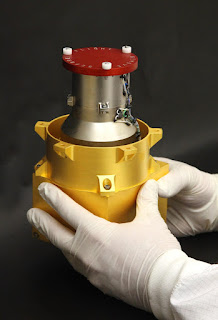
Image credit: That's not a VOC-detector, it's a radiation detector, used by NASA JPL for Mars research.

Partially Related Post Script:
Why cannabis smells skunky
Dec 2021, phys.org

Now, researchers reporting in ACS Omega have discovered a new family of prenylated volatile sulfur compounds (VSCs) that give cannabis its characteristic skunky aroma. 

Prior studies have focused mainly on terpenoids—molecules that range in odor from fuel-like to woody, citrusy or floral.

However, although terpenoids are the most abundant aroma compounds in cannabis, there is little evidence that they provide the underlying skunk-like smell of many cultivars. Skunks use several VSCs in their smelly defense sprays, so Iain Oswald and colleagues suspected that there could be similar molecules in cannabis.

One compound in particular, 3-methyl-2-butene-1-thiol, referred to as VSC3, was the most abundant VSC in the cultivars that the panel reported to be most pungent. This compound has previously been implicated in the flavor and aroma of "skunked beer"—beer that goes bad after being exposed to UV light.

via American Chemical Society: Iain W. H. Oswald et al, Identification of a New Family of Prenylated Volatile Sulfur Compounds in Cannabis Revealed by Comprehensive Two-Dimensional Gas Chromatography, ACS Omega (2021). DOI: 10.1021/acsomega.1c04196