Monday, April 11, 2022

Another Step Towards Artificial Olfaction


Artificial recreation of smells using a multicomponent olfactory display
Apr 2022, phys.org

Twenty odor components were extracted using the mass spectra of 185 essential oils. The sensory test for seven typical essential oils revealed that their scents could be successfully replicated. The researchers mimicked a variety of smells simply by adjusting the mixture composition of various odor components. The odor components ejected from microdispensers were blended at the surface of the surface acoustic wave device. 

The 7 odors are lemon, palmaloza, carrot seed, elmi, lavender, chypre, and mentha arvensis. (And note these are essential oils, not individual molecules.)

There is still no formula for primary smells in the same way that we have the 3 primary colors of red, blue, and yellow/green. This is an advance nonetheless - 7 molecules are used to create 185 odors.

For reference, the Davnieks set has 146 descriptors; although it was made in 1985, it still represents a fair sampling of all the smells you might encounter in a day (see here for a more sophisticated description of this set and its shortcomings). 

via Tokyo Institute of Technology: Masaaki Iseki et al, A Study of Odor Reproduction Using Multi-component Olfactory Display, IEEJ Transactions on Sensors and Micromachines (2022). DOI: 10.1541/ieejsmas.142.63

Image credit: Dimensionality reduction: Each dot represents a point in the original space that corresponds to a point (shown by a dot) in the lower-dimensional reduced space. Deep learning approach based on dimensionality reduction for designing electromagnetic nanostructures, npj Computational Materials, 2020. [link]


Notes:
Dravnieks A. Atlas of odor character profiles. Philadelphia: ASTM; 1985.
Arctander S. Perfume and flavor chemicals (aroma chemicals). Montclair, NJ: Author; 1969.
Keller A, Vosshall LB. Olfactory perception of chemically diverse molecules. BMC Neurosci. 2016 Aug 8; 17(1):55.

Thursday, April 7, 2022

Smells Like News


Too many headlines, too little time.
Image credit: Smell Test, Win McNamee Getty Images, 2010


Smelling Disease
Monell Updates, Feb 2022

Led by Monell chemical ecologist Bruce A. Kimball, PhD, the research team is taking the innovative approach of classifying fever-inducing diseases based on their distinctive signatures of volatile compounds in urine and saliva.

via the Monell Chemical Senses Center: Millet P., Martin, T., Opiekun, M., Beauchamp, G.K., and Kimball, B.A. (2021). Differing Alterations of Odor Volatiles among Pathogenic Stimuli. Chem. Senses. 46: bjab030.


'E-nose' could someday diagnose Parkinson's disease by 'smelling' skin
Feb 2022, phys.org
Three odor compounds (octanal, hexyl acetate and perillic aldehyde) were significantly different between the two groups, which they used to build a model for PD diagnosis.

Next, the researchers analyzed sebum from an additional 12 PD patients and 12 healthy controls, finding that the model had an accuracy of 70.8% in predicting PD. The model was 91.7% sensitive in identifying true PD patients, but its specificity was only 50%, indicating a high rate of false positives.

Sorry to say but those might not be false positives...we've seen this before (they haven't been diagnosed yet).

via Department of Biomedical Engineering, Zhejiang University, Hangzhou: Wei Fu et al, Artificial Intelligent Olfactory System for the Diagnosis of Parkinson's Disease, ACS Omega (2022). DOI: 10.1021/acsomega.1c05060


Study identifies brain areas that support social semantic accumulation
Feb 2021, phys.org

Olfaction is a social sense, and more reasons why we're bad at naming smells, because as somewhat social words, we think of them in sentences not in words...

via CAS Key Laboratory of Behavioral Science in China and University of Trento in Italy: The brain network in support of social semantic accumulation. Social Cognitive and Affective Neuroscience(2021). DOI: 10.1093/scan/nsab003.


Odd smell: Flies sniff ammonia in a way new to science
Jun 2021, phys.org

They probed all three types of scent neurons in the flies' sensilla, but they didn't respond to ammonia. But the fly was obviously smelling it, based on its behavior. So the researchers realized there had to be a fourth scent neuron they hadn't known was there. And they found it—but it didn't seem to have the usual odor receptors on it. It was covered in ammonia transporter (Amt), a molecule that is known to allow ammonia in and out of cells.

No one had ever known a transporter molecule to also act as an odor receptor. But there it was. When they selectively killed off only that type of neuron, the flies did not respond to ammonia at all. And when the team forced scent neurons that don't normally respond to ammonia to express Amt on their surfaces, those neurons began responding to ammonia, too.

via University of Connecticut: Alina Vulpe et al, An ammonium transporter is a non-canonical olfactory receptor for ammonia, Current Biology (2021). DOI: 10.1016/j.cub.2021.05.025


Scientists on the scent of flavor enhancement
Jul 2021, phys.org

On smelling -- The less they knew about the reference aroma, the higher their chances of correctly identifying a match—a finding that suggests aroma detection involves learning, memory and cognitive strategy.

via The Ohio State University: Mackenzie E. Hannum et al, Non-food odors and the duality of smell: Impact of odorant delivery pathway and labeling convention on olfactory perception, Physiology & Behavior (2021). DOI: 10.1016/j.physbeh.2021.113480
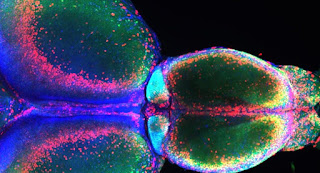
Image credit: Zebrafish Brains - Stephanie Fore - 2021


Smells and emotions tug on the brain's habenula, or 'little rein'
Aug 2021, phys.org

Situational awareness:
Kavli Institute researchers showed that the habenula relays information from the outside world, such as smell and sight, along with internal states associated with emotions and learning, to the brain regions that control adaptive behaviors.

"It turns out that the habenula is an information hub," said Emre Yaksi, a professor at NTNU's Kavli Institute for Systems Neuroscience and head of the research group that did the study. "It integrates information about odors from the environment with the information from the limbic system, which is involved in emotional behaviors and learning."

"We argue that the habenula helps the brain to stop certain actions and communications across brain regions, in order to shift it to another mode that is better suited to the situation that the scent warns of," he said. 

via Norwegian University of Science and Technology: Ewelina Magdalena Bartoszek et al, Ongoing habenular activity is driven by forebrain networks and modulated by olfactory stimuli, Current Biology (2021). DOI: 10.1016/j.cub.2021.08.021


Your sense of smell may be the key to a balanced diet
Aug 2021, phys.org

Long story short -- if you just ate a cinnamon bun, you're less likely to want a cinnamon bun, because something about your olfactory acclimation, adaptation, attenuation... 

via Northwestern University: Laura K. Shanahan et al, Olfactory perceptual decision-making is biased by motivational state, PLOS Biology (2021). DOI: 10.1371/journal.pbio.3001374


New research 'sniffs out' how associative memories are formed
Sep 2021, phys.org

Neuroscientists at the University of California, Irvine have discovered specific types of neurons within the memory center of the brain that are responsible for acquiring new associative memories. Additionally, they have discovered how these associative memory neurons are controlled. 

Specific cells in the lateral entorhinal cortex of the medial temporal lobe, called fan cells, are required for the acquisition of new associative memories and these cells are controlled by dopamine, a brain chemical known to be involved in our experience of pleasure or reward.

In the study, researchers used electrophysiological recordings and optogenetics to record and control activity from fan cells in mice as they learn to associate specific odors with rewards. This approach led researchers to discover that fan cells compute and represent the association of the two new unrelated items (odor and reward). Without these cells, pre-learned associations can be retrieved, but the new associations cannot be acquired. Additionally acquiring new associations also requires dopamine.

"We never expected that dopamine is involved in the memory circuit. However, when the evidence accumulated, it gradually became clear that dopamine is involved," said Igarashi. "These experiments were like a detective story for us, and we are excited about the results."

via University of California, Irvine: Lee, J.Y. et al. Dopamine facilitates associative memory encoding in the entorhinal cortex. Nature (2021). doi.org/10.1038/s41586-021-03948-8


A universal law of physiology emerges from a professor's research
Oct 2021, phys.org

"Imagine you walk into a room someone has just painted. You'll likely think, 'This smells bad.' But the sensation decreases as you stay in there. The molecules don't disappear, not within that time frame. You've just gotten used to it."
-University of Toronto Engineering professor Willy Wong 

From an initial state, the organism's response activity rises to a peak response, then falls to a new final steady state. Wong has discovered that those three fixed points on the adaptation curve form a mathematical relationship that is obeyed across all sensory modalities and organisms.

"I compared 250 measurements of adaptation from different branches of sensory physiology and found that they are all compatible with a single, simple equation," says Wong.

via University of Toronto: Willy Wong, Consilience in the Peripheral Sensory Adaptation Response, Frontiers in Human Neuroscience (2021). DOI: 10.3389/fnhum.2021.727551


Scent of newborn infants blocks aggression in men, stimulates aggression in women
Nov 2021, phys.org

Dr. Eva Mishor from Prof. Noam Sobel's research group at Weizmann's Brain Sciences Department and the Azrieli Institute for Human Brain Imaging and Research have found that a molecule that can likely be sensed by all mammals, and that is found in abundance on the scalps of newborns, sparks brain and behavioral changes in adults who are exposed to it, affecting women one way, and having the opposite effect on men.

The finding is among the first to provide a direct link between human behavior and a single molecule picked up through the sense of smell. Furthermore, the diametrically opposed change it effected in women and men sheds new and surprising light on the mediating role sex plays in olfactory perception and its resulting neurological processes.

They're talking about pheromones, which as far as we know, do not work in humans. Apparently that has changed now?

The odor is hexadecanal, or HEX, and although you can't smell it, if you sniff it, it will affect your behavior. We already know it affects mice, but humans not so much. Not until now that is. We also know, through less-scientific means, that the only universally-liked smell for all people everywhere is the baby's head. 

via Weizmann Institute of Science: Eva Mishor et al, Sniffing the human body volatile hexadecanal blocks aggression in men but triggers aggression in women, Science Advances (2021). DOI: 10.1126/sciadv.abg1530

Thursday, March 31, 2022

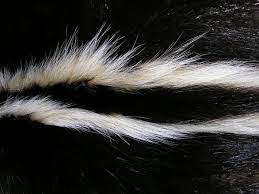
Skunk Notes


Why cannabis smells skunky
Dec 2021, phys.org

Finally, move over terpenes, the real smell of cannabis is here -- a new family of prenylated volatile sulfur compounds (VSCs), aka "skunk" is found in dank buds. 

Of the VSC varieties, 3-methyl-2-butene-1-thiol (VSC3) was the skunkiest. And of the 13 strains of cannabis tested, Bacio Gelato was the skunkiest.

via American Chemical Society: Iain W. H. Oswald et al, Identification of a New Family of Prenylated Volatile Sulfur Compounds in Cannabis Revealed by Comprehensive Two-Dimensional Gas Chromatography, ACS Omega (2021). DOI: 10.1021/acsomega.1c04196

Post Script:
Don't forget that dank smells does not mean potent pot, yet people associate citrusy-sweet-sour aroma with more THC:
Gilbert AN, DiVerdi JA (2018) Consumer perceptions of strain differences in Cannabis aroma. PLoS ONE 13(2): e0192247. https://doi.org/10.1371/journal.pone.0192247

And, from a separate study, it was noticed that the genetic, terpinoid and cannabinoid profiles of selected strains didn't match their descriptions as either Sativa or Indica. Instead, it looks like people just name them whatever they smell like, sweet for Sativa and earthy for Indica:
S. Watts et al, Cannabis labelling is associated with genetic variation in terpene synthase genes, Nature Plants (2021) DOI: 10.1038/s41477-021-01003-y

Can't leave without this; why does natural gas smell somewhat skunky? It's been odorized on purpose since a big explosion that killed almost 300 people in the 1930's:
49 CFR, Part 192:Transportation of Natural and Other Gas by Pipeline: Minimum Federal Safety Standard, Subpart L: Operations, 192.625 - "Odorization of Gas"

Are Terpenes the New Antioxidants, 2018

Monday, March 28, 2022

Simulated Oversight


'Virtual nose' may reduce simulator sickness in video games
Purdue University News, Mar 2015  

Yes, you can relieve motion sickness in virtual reality by coding a nose overlay into the frame as a visual guide.

I sure didn't realize it until I read this, but you're looking at your nose all day; you're looking at it right now. Well, maybe you're not looking at it, but it's there. Maybe now you're looking at it, since we're talking about it. Anyway, it's there all day. If your eyes are open, your nose is in your field of vision. And when it's not, you're disoriented.

I'm pretty sure this is not what they mean when they say "right under your nose" or "right in front of your face," but it sure works in this case. Throw that onto the heaping pile of other things we don't notice about our nose or what it does for us. And add that to the other pile of things that we could improve if we looked to the nose and olfaction in general as a source of biomimetic supremacy.

Notes:
via Purdue University: Whittinghill, D.M. et al. Nasum virtualis: A simple technique for reducing simulator sickness. In Proceedings of the Games Developers Conference (GDC), San Francisco, CA, USA, 2–6 March 2015; p. 74.

via University of Wuerzburg: A Virtual Nose as a Rest-Frame - The Impact on Simulator Sickness and Game Experience. Carolin Wienrich et al, 10th International Conference on Virtual Worlds and Games for Serious Applications, Sep 2018. DOI:10.1109/VS-Games.2018.8493408

via the BioComputing Lab at Korea University of Technology and Education: A Study on Visually Induced VR Reduction Method for Virtual Reality Sickness. Ju-hye Won and Yoon Sang Kim. Appl. Sci. 2021, 11(14), 6339; https://doi.org/10.3390/app11146339.

Thursday, March 17, 2022

Flipping the Switch


The 'surprisingly simple' arithmetic of smell
Jan 2022, phys.org

The age of artificial olfaction is upon us.

This is now the second report in the last few months that presents a computational model for the olfactory bulb, which is the biological supercomputer on your face that crushes gigtons of databytes per attosecond (slight exaggeration).

The last paper came from a physicist working on information theory (Tavoni et al at Penn State). Another paper the month prior, which came from none other than the lab that discovered olfactory receptors, found, again, a computational model, discovered via machine learning, that compresses the n-dimensionality of odorant sensory data. 

But again, this new paper comes primarily from a department of electrical and systems engineering, in collaboration with the biomedical engineering department. I don't know everything that's going on, I only read the papers on the weekends, but that's a lot of papers about computing in olfaction, and from people who do not study olfaction exclusively.

And this is at the level of the bulb. We're not talking about the DREAM project, where big-data's worth of words and molecules are processed by GPT-3 to predict the names of smells. This is about looking at the hardware. How in the world does that bulb, which compresses thousands of receptors, themselves receiving information from un-countable stimuli, into dozens of signals that go on to control the entire enormity of a mammalian body via its limbic system. The bulb is the choke point for this system, and it's using magic that we are only now beginning to understand to the point of copying it. 

I doubt this is the earliest example, but as far back as 1991, scientists were talking about olfaction as a model system for computational neuroscience. These were neuroscientists and psychologists writing about this. But they could see the significance -- it's literally wired like the deep learning neural networks you hear about in the news (you know, powering the AI in your toaster, your tissue box and your alarm clock). 

It really looks like we're getting the hang of this. They started with a simple question -- how come things smell the same to us, even in different contexts or environments? Like how a plaid shirt looks okay in your sunlit bedroom, but later looks like a shit sandwich in the fluorescent lights of your office (or remember the black-and-gold dress? maybe you're trying to forget). 

If smells come from evaporating molecules, which are literally volatile, changing all the time based on environmental conditions, how come they always smell the same to us? Maybe olfaction would be a good model to investigate. 

So they did, by pairing locusts with a training smell, under all kinds of different conditions, hungry, full, hot, cold, humid, dry. Every time, the locust recognized the training smell (with the locust equivalent of a salivating dog). Yet, "The neural responses were highly variable," one of the researchers said. Same molecule, same response, but completely different receptor patterns, every time. It just doesn't make sense.

Deep learning to the rescue (obviously). The algorithm found that it's the interaction of activating and inhibiting neurons; I'll copy the copy directly:

Finding the features you want is similar to the information conveyed by the ON neurons. Absence of deal breakers is similar to silencing of the OFF neurons. As long as enough ON neurons that are typically activated by an odorant have fired—and most OFF neurons have not—it would be a safe bet to predict that the locust will open its palps in anticipation of a grassy treat.

via the Department of Electrical and Systems Engineering and the Department of Biomedical Engineering, Washington University in St. Louis: Srinath Nizampatnam et al, Invariant odor recognition with ON–OFF neural ensembles, Proceedings of the National Academy of Sciences (2022). DOI: 10.1073/pnas.2023340118

And further reading:
via University of Pennsylvania: Gaia Tavoni et al, Cortical feedback and gating in odor discrimination and generalization, PLOS Computational Biology (2021). DOI: 10.1371/journal.pcbi.1009479

via Massachusetts Institute of Technology's McGovern Institute for Brain Research: Peter Y. Wang et al, Evolving the olfactory system with machine learning, Neuron (2021). DOI: 10.1016/j.neuron.2021.09.010.

via MIT: Davis J L & Eichenbaum H, eds. (1991). Olfaction: A Model System for Computational Neuroscience. Boston: Bradford Books/MIT Press.

Deep Nose, 2022
Signal to Noise for the Win, 2021
Olfatory Overload, 2021


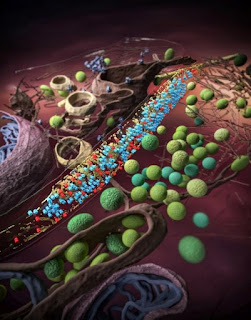
Image credit: Inhibitory Synapse - TAO Changlu, LIU Yuntao, and BI Guoqiang; Image design: WANG Guoyan, MA Yanbing - 2021


Friday, March 11, 2022

Somatic Semantics


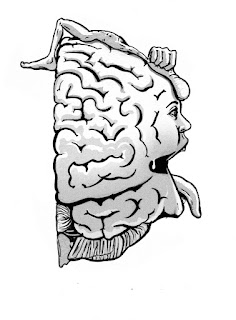
The above image was illustrated by Joe Scordo for Hidden Scents circa 2014, and based on the 1950's illustrations credited to Penfield and Rasmussen, which is need of an update, no?

Brain computer interface turns mental handwriting into text on screen
May 2021, phys.org

My rudimentary understanding of the brain says that the patterns coming from you head when you use any form of motor control would be much easier to see that patterns from simply visualizing letterforms. Something about the somatosensory cortex anatomical map.

For the first time, researchers have deciphered the brain activity associated with trying to write letters by hand. Working with a participant with paralysis who has sensors implanted in his brain, the team used an algorithm to identify letters as he attempted to write them. Then, the system displayed the text on a screen—in real time.

via Howard Hughes Medical Institute: High-performance brain-to-text communication via handwriting, Nature (2021). DOI: 10.1038/s41586-021-03506-2

Post Script:

'Rough' words feature a trill sound in languages around the globe
Jan 2022, phys.org

"They demonstrate a deep-rooted and widespread association between the sounds of speech and our sense of touch."" -Mark Dingemanse, Co-author and Associate Professor in Language and Communication at Radboud University

Also, kiki bouba.

via Radboud University, home of the Limbic Signal patron saint Asifa Majid: Bodo Winter et al, Trilled /r/ is associated with roughness, linking sound and touch across spoken languages, Scientific Reports (2022). DOI: 10.1038/s41598-021-04311-7

Why writing by hand makes kids smarter
Oct 2020, phys.org

"The use of pen and paper gives the brain more 'hooks' to hang your memories on. Writing by hand creates much more activity in the sensorimotor parts of the brain. A lot of senses are activated by pressing the pen on paper, seeing the letters you write and hearing the sound you make while writing. These sense experiences create contact between different parts of the brain and open the brain up for learning. We both learn better and remember better," says Van der Meer.

via Norwegian University of Science and Technology: Eva Ose Askvik et al. The Importance of Cursive Handwriting Over Typewriting for Learning in the Classroom: A High-Density EEG Study of 12-Year-Old Children and Young Adults, Frontiers in Psychology (2020). DOI: 10.3389/fpsyg.2020.01810

Pan-Anosmia


Mechanism behind loss of smell with COVID-19 revealed
Feb 2022, phys.org

  • For more than 12 percent of COVID-19 patients, olfactory dysfunction persists 
  • SARS-CoV-2, indirectly dials down the action of olfactory receptors
  • The new study may also shed light on the effects of COVID-19 on other types of brain cells, and on other lingering neurological effects of COVID-19 like "brain fog," headaches, and depression
  • Presence of the virus near nerve cells in olfactory tissue brought an inrushing of immune cells, microglia, T cells, and cytokines that changed the genetic activity of olfactory nerve cells
  • They used infected golden hamsters and olfactory tissue from 23 human autopsies [hamsters are more susceptible to nasal cavity infections]

Reminder of why it's such a big deal when you start messing with smell:
"Other work posted by these authors suggests that olfactory neurons are wired into sensitive brain regions, and that ongoing immune cell reactions in the nasal cavity could influence emotions, and the ability to think clearly (cognition), consistent with long COVID."

The talk on gene behavior and downregulation of receptor building is lost on me (not a geneticist, not a neurologist), but one of the main points I am reminded of when reading this is -- for those who experienced a change in taste or smell, for any reason, but especially after a COVID infection, long-term brain damage is possibly ongoing, but it's the kind to go undetected for another 20-30 years, depending on how old you are, of course. 

They also seem to suggest that this is an explanation for why people experience brain fog, and even emotional disturbance, all of which makes a lot of sense, because your sense of smell is connected to the all those brain areas -- the hippocampus for memory and the amygdala for emotion, both integral parts of the limbic system. 

via NYU Langone Health Department of Microbiology, NYU Grossman School of Medicine and Columbia University: Marianna Zazhytska et al, Non-cell autonomous disruption of nuclear architecture as a potential cause of COVID-19 induced anosmia, Cell (2022). DOI: 10.1016/j.cell.2022.01.024


WHERE CAN I GET MORE INFORMATION ON SMELL LOSS?

Monell Anosmia Project - US Organization studying smell and taste

AbScent - UK Organization raising public awareness of smell loss

National Institute on Deafness and Other Communicable Disorders (NIDC) - Smell Disorders

ENT UK - Loss of Smell as Marker of Covid-19 Infection


Post Script: